

The internet is one of the most revolutionary inventions of our era, but it comes with a hidden cost that we often overlook: digital pollution. The environmental impact of online activities is real and steadily increasing, with the web significantly contributing to global CO2 emissions. At Comac, we have always been committed to reducing our ecological footprint. That’s why we decided to tackle this digital sustainability challenge through an innovative project in collaboration with Karma Metrix, aimed at making our company website greener and more efficient.
Digital pollution: an invisible but real problem
When we think about climate change, we tend to focus on industries, transportation, or energy, often neglecting the role of the digital world. If the internet were a country, it would rank as the fourth-largest CO2 emitter globally, behind only the USA, China, and India, as reported in the The Shift Project’s Lean ICT: Towards Digital Sobriety.
The environmental impact of the web is mainly linked to:
- Servers and data centers, powered by energy (often derived from fossil fuels);
- Cooling systems, essential to maintain their operation;
- Inefficient website design, which increases energy consumption.
Digital pollution is a real issue, and this has led us to take on this challenge directly. By working on Comac’s website, we are optimizing the energy efficiency of its pages to reduce consumption and improve the overall performance of our site.
Comac’s digital sustainability journey with Karma Metrix
With the help of Karma Metrix, we conducted an in-depth analysis of the CO2 emissions generated by our website, gathering precise and actionable data to identify areas for improvement. As a result, we were awarded the Karma Metrix Energy Efficient Website seal, a recognition of Comac’s commitment to a more sustainable web.

The Karma Metrix algorithm analyzed the 100 most-visited pages on our website from both desktop and smartphone devices over the past year, measuring the carbon footprint of each. The data revealed that each page view generates an average of 1.54 grams of CO2e, with an estimated annual total of 0.33 tons of CO2e. While these values are already 12% lower than the global average, our goal is to continue improving the energy efficiency of Comac’s website.
How we improve the energy efficiency of Comac’s website
Digital sustainability goes beyond measurement; it requires concrete actions to reduce environmental impact. Based on the analysis by Karma Metrix, we have outlined our next steps, focusing on targeted improvements, including:
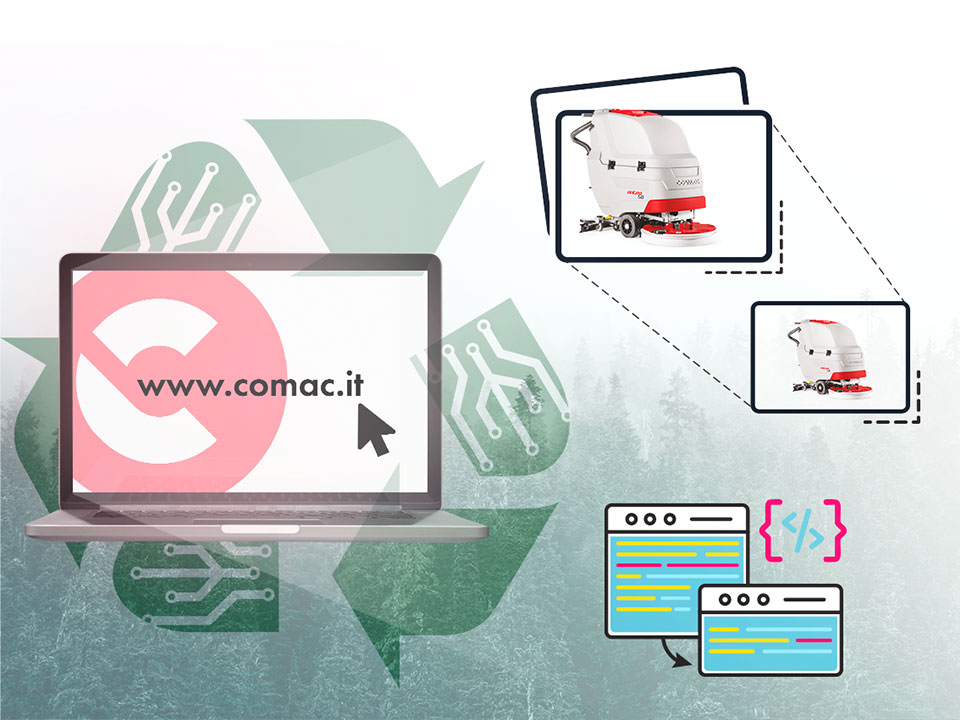
- Optimizing images and multimedia content, reducing their size and improving their format;
- Streamlining code, removing unnecessary elements that increase energy consumption.
Through these actions, we aim to reduce the website’s CO2 emissions by 24%, equivalent to 43 kg of CO2. This will not only lower our environmental impact but also enhance the website’s performance, making it faster and smoother for users.
Digital sustainability and beyond: Comac’s concrete actions
Engaging in digital sustainability is just the latest step in Comac’s broader commitment to a more sustainable future. Alongside reducing the emissions of our website, we are also working on projects like calculating the carbon footprint of our floor scrubbers and sweepers and creating the Biodiversity Oasis, demonstrating that sustainability is not just a goal but a reality that grows with every action we take. Our sustainability journey is just beginning, and we will continue to improve, learn, and innovate to make both our world and the digital realm more sustainable.
Learn more about our commitment and Comac’s sustainability projects by visiting the dedicated section on comac.it.
This post is also available in: