

Seasonal pool maintenance is a technical operation that, when carried out correctly, helps extend the life of the pool and ensures proper hygiene. The accumulation of organic residues such as algae and mineral deposits such as limescale is a natural process that requires periodic deep cleaning.
For this task, a pressure washer represents one of the most effective mechanical solutions. Cleaning a pool with a pressure washer means using a high-pressure water jet to remove algae, limescale and other residues from the surfaces of the pool basin. The principle is simple: the kinetic energy of the pressurized water jet breaks down and removes deposits that adhere to surfaces, even the more porous ones.
Choosing the right pressure washer should not be left to chance. The following parameters are essential for optimal cleaning performance:
- Pressure (min. 150 bar): the force with which water impacts the surface, necessary to loosen and detach dirt.
- Flow rate (over 450 l/h): the volume of water delivered, essential for rinsing away residues once they have been dislodged.
Cleaning performance can be further enhanced with dedicated accessories, such as telescopic lances for safely working on vertical surfaces and brushes that combine mechanical action with the cleaning power of water. This guide outlines a practical operating protocol to help you make the most of your equipment while avoiding accidental damage to the liner or tile joints.
Table of contents
- Cold water or hot water pressure washer: how to choose the right one
- How to clean a pool with a pressure washer
- Where not to use a pressure washer in a pool
- Types of pools: the right cleaning approach for each
- In-ground pool
- Semi-inground pool
- Tiled or PVC pool
- Cleaning an above-ground pool with a pressure washer
- Pool components: how to clean them
- How to clean the pool liner and walls
- How to clean a pool after winter
- What a pressure washer is and how it works
Cold Water or hot water pressure washer: how to choose the right one
The choice between a cold water and a hot water pressure washer depends on the level of dirt and the specific cleaning context.
Cold water pressure washers are ideal for routine maintenance and for removing dust, light algae and surface residues. They are generally more compact, versatile and well suited for frequent use.
Hot water pressure washers are more effective when dealing with persistent biofilm, grease, layered organic residues or dark stains along the pool edge. The combined action of heat and pressure helps break down dirt more quickly and efficiently, often reducing the need for detergents.
To evaluate technical features, configurations and available models, you can explore the complete range of Comac pressure washers, which includes both cold and hot water solutions designed for different cleaning requirements.

How to clean a pool with a pressure washer
To clean a pool effectively with a pressure washer, the machine’s power alone is not enough. A proper method is equally important. Once the pool has been drained, it is advisable to follow a four step operating protocol that helps maximize cleaning efficiency while protecting your investment.
Step 1: Inspection and preparation
Before starting, it is recommended to test the pressure washer on a small and inconspicuous area. This simple check allows you to verify that the pressure is suitable for the pool material and helps prevent possible damage to more delicate surfaces such as the liner.
Step 2: Setup and cleaning technique
The distance between the nozzle and the surface is an important parameter. In most cases, it is advisable to maintain a distance of about 50 cm. Work with steady and continuous movements, starting from the upper part of the pool, such as the edge and ladder, and gradually moving down toward the bottom. This approach helps ensure the entire surface is cleaned evenly without leaving untreated areas.
Step 3: Chemical and mechanical treatment
- Application: apply a detergent specifically designed for swimming pools. Using a foam lance is recommended to create a uniform layer that can act effectively on the surface.
- Contact time: carefully follow the contact time indicated by the manufacturer to allow the active ingredients to dissolve dirt, algae and limescale deposits.
- Mechanical action: use a brush, either manual or designed for pressure washers, to remove the most stubborn residues.
Step 4: Rinsing and maintenance
Complete the cleaning process with a thorough rinse to remove any remaining detergent from the surfaces. Finally, proper equipment care is an essential part of the job: clean and store the pressure washer correctly to maintain its efficiency over time.

To achieve effective results at every stage, it is essential to use the right pressure: to learn how to choose the correct level, you can read our guide on how many bar a pressure washer should have.
Algae in the pool: what to do
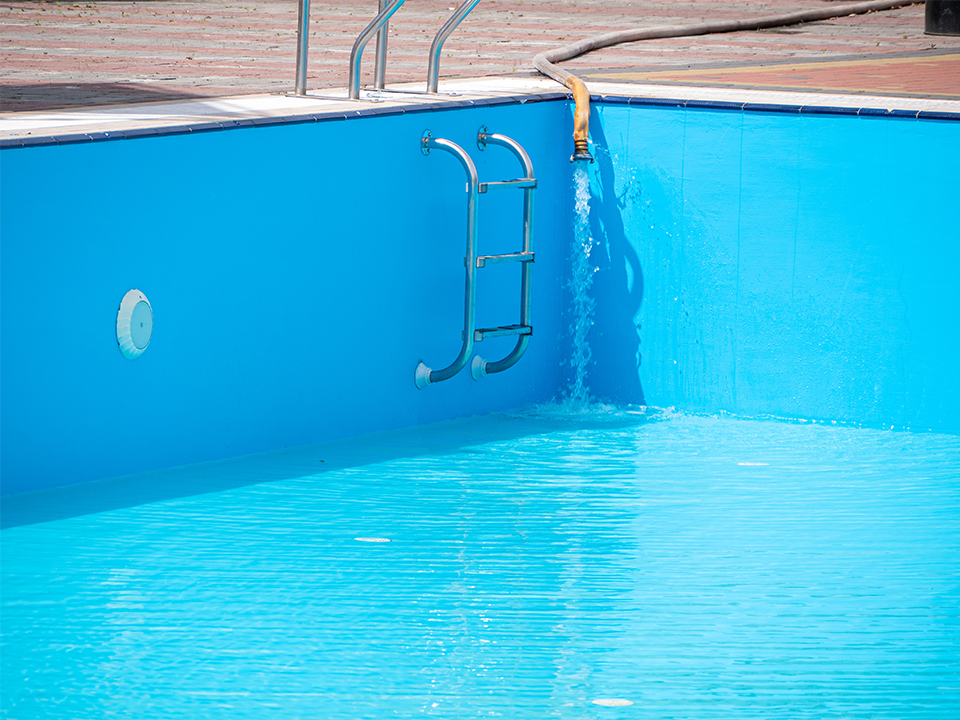
When algae appear on the walls or bottom of a pool, a pressure washer can help remove them quickly from the surfaces before applying a chemical treatment. This approach is particularly useful when the pool has been drained for seasonal maintenance. The presence of algae is one of the most common issues in pool maintenance. They tend to develop easily when water is exposed to sunlight, circulation is limited, or the chemical balance of the water is not properly maintained.
When the pool is empty, using a pressure washer helps remove algae deposits from the walls and floor. After this mechanical removal, it is advisable to also apply a chemical treatment to prevent the problem from returning quickly.
It is therefore recommended to:
- apply a specific anti-algae treatment.
- check that the pool water pH is correctly balanced.
- inspect the pool filter and circulation system.
Combining mechanical cleaning with a pressure washer and appropriate chemical treatment helps keep the pool cleaner for longer.
Where not to use a pressure washer in a pool
A pressure washer is a highly effective cleaning tool, but not all pool surfaces can tolerate the same level of pressure. Improper use may damage finishes or sensitive components.
It is advisable to avoid directing the water jet onto:
- particularly thin or deteriorated liners
- damaged grout between tiles
- silicone joints or seals
- electrical components such as lights or control panels
In these cases, it is preferable to reduce the pressure or clean the area using manual brushes and specific detergents.
Types of pools: the right cleaning approach for each
Not all pools are built in the same way, and this also influences the most appropriate cleaning method. The materials used for the structure and the lining determine the level of pressure that can be safely applied during cleaning.
In-ground pools, for example, are often constructed from reinforced concrete and finished with tiles or mosaic. Above-ground pools, on the other hand, typically use lighter materials such as PVC or coated steel. There are also semi-inground pools that combine features of both.
Understanding the type of pool helps you select the most suitable cleaning technique and properly adjust the pressure washer.
In-Ground Pool
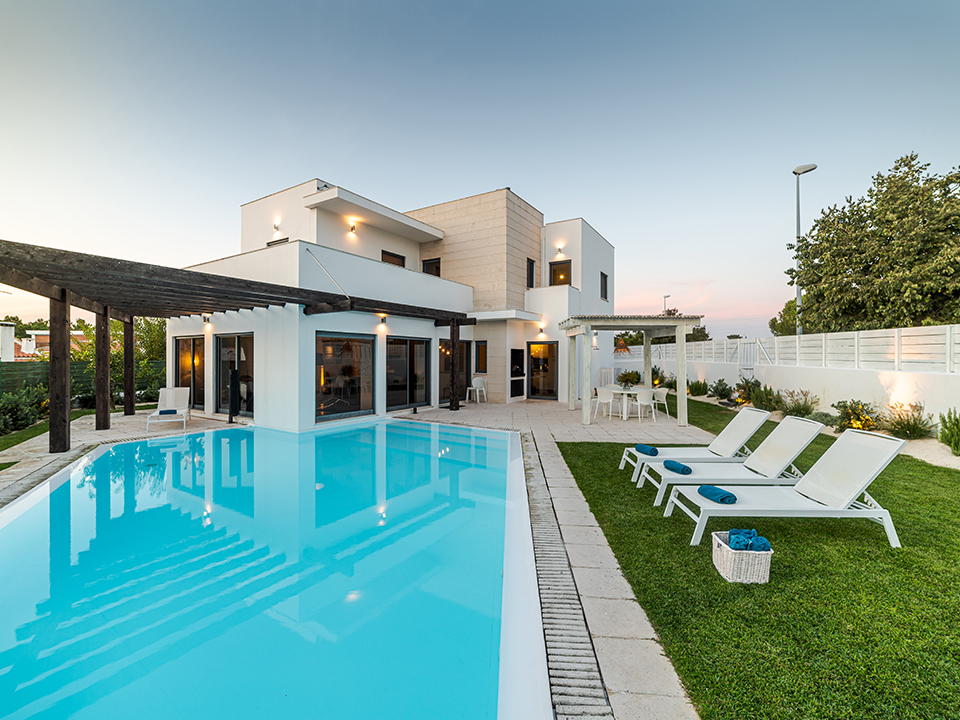
In-ground pools are among the most common in private homes and hospitality facilities. Their reinforced concrete structure and tile or mosaic lining provide good resistance, even during more intensive cleaning operations.
When the pool is drained, a pressure washer can be used to remove limescale, algae and residues that accumulate along the walls, particularly around the waterline.
During cleaning it is recommended to:
- start from the upper edge of the pool;
- maintain a consistent distance between the nozzle and the surface;
- proceed with steady, controlled movements down toward the bottom.
A professional pressure washer with adequate pressure and flow rate allows the work to be carried out quickly and effectively.
CI H5
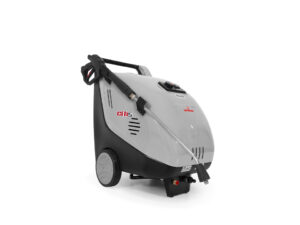
When cleaning an in-ground pool, especially in the presence of limescale, biofilm, or layered dirt along the waterline, hot water helps loosen deposits from surfaces more effectively. CI H5 is the most compact professional hot water pressure washer in the Comac range, making it a practical and efficient solution for cleaning in-ground pools.
The single-phase electric induction motor with thermal protection ensures reliable and continuous operation, while the vertical boiler with a double coil provides fast and consistent water heating. The combination of heat and high pressure makes CI H5 particularly effective for cleaning tiles, pool walls, and the pool edge.
Semi-inground pool
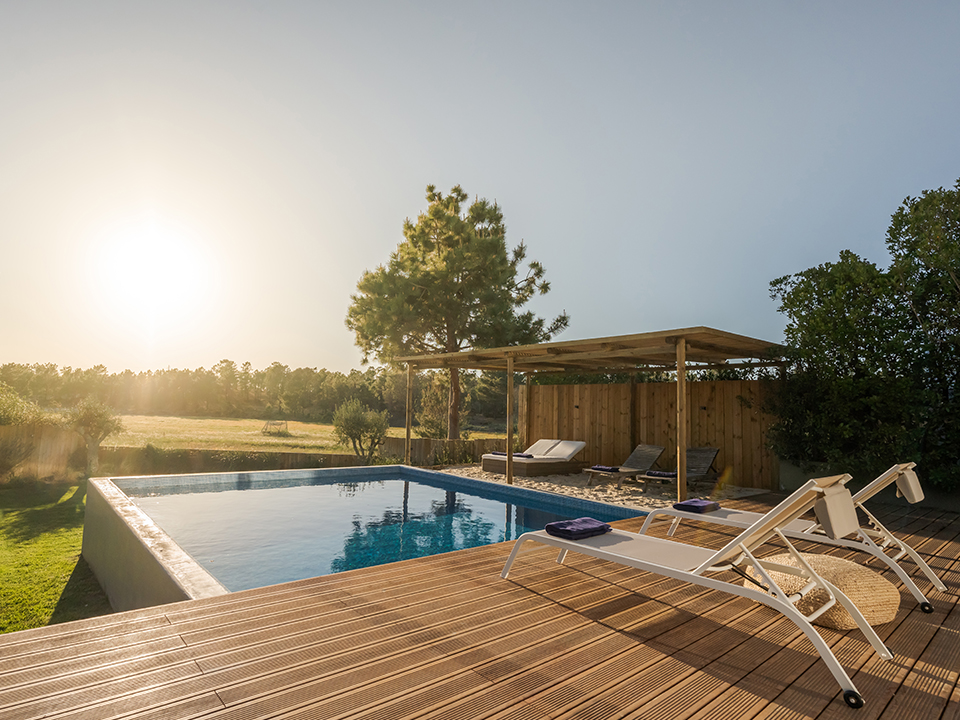
Semi-inground pools combine a partially buried structure with a section that remains above ground. From a cleaning perspective, they require a little extra care in the areas where the structure meets the lining. A pressure washer can be used to remove dirt and algae, but it is important to avoid concentrating the jet directly on joints or structural connections. Using a fan nozzle helps distribute the pressure more evenly and reduces the risk of damage.
CI C15
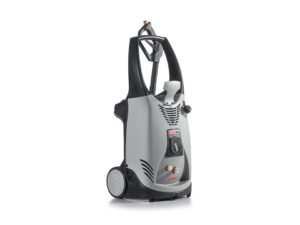
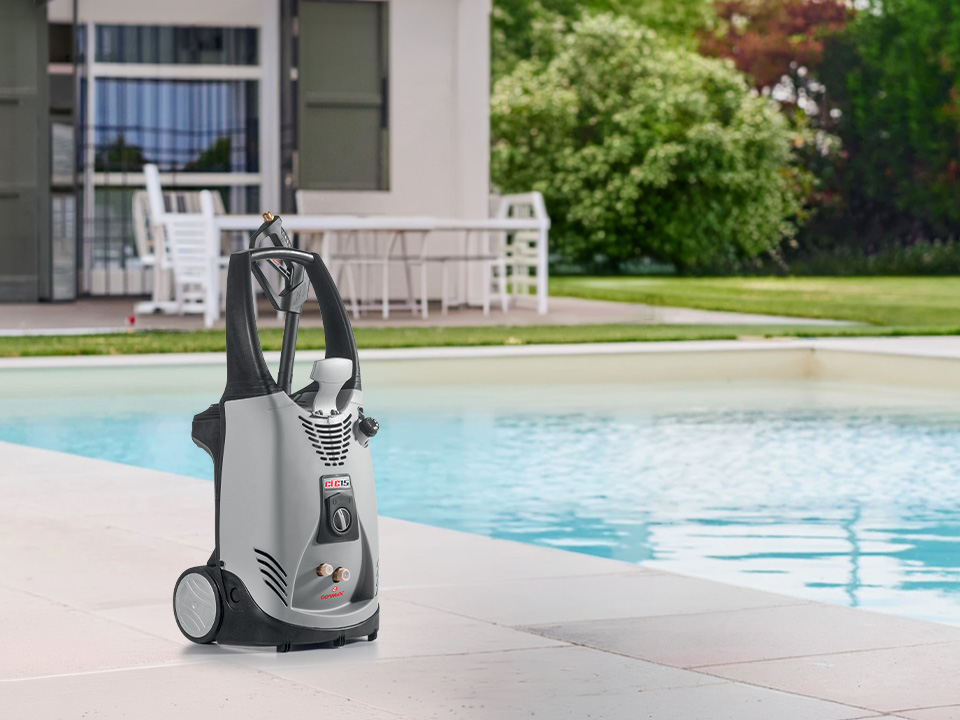
For cleaning a semi-inground pool, a cold water pressure washer provides a practical solution for routine maintenance of the walls, floor, and pool edge. CI C15 is a professional cold water pressure washer designed to deliver high pressure in a compact and easy-to-handle machine. Its vertical design, ergonomic handle, and rubber wheels make it easy to move around the pool during cleaning operations.
The power of the water jet allows dirt, organic residues, and deposits to be effectively removed from the surfaces of a semi-inground pool.
Tiled or PVC Pool
The type of lining material has a significant impact on the cleaning method. Tiled pools are generally more durable and can withstand higher pressure. The pressure washer jet helps remove limescale deposits and dirt that tend to accumulate between the tile joints.
Pools with a PVC or liner covering require greater care. In these cases it is advisable to:
- reduce the pressure;
- increase the distance between the nozzle and the surface;
- use a wider spray pattern.
These precautions help prevent damage or deformation of the material.
CI C20
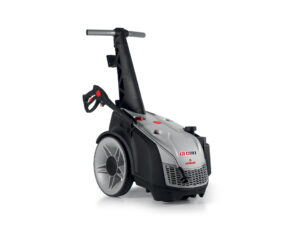
When cleaning a pool with a PVC or liner covering, it is important to use a pressure washer that ensures effective cleaning without applying excessive pressure that could damage the lining.
CI C20 is a compact and highly maneuverable single-phase cold water pressure washer. Its ergonomic V-shaped handle provides a comfortable grip during use, while its compact size makes it easy to move around the pool, even in confined spaces. By maintaining the correct distance between the nozzle and the surface, the combination of pressure and flow rate allows dirt and residues to be effectively removed from PVC pool walls while ensuring precise control of the jet.
Cleaning an above-ground pool with a pressure washer
Cleaning an above-ground pool with a pressure washer is possible, but it requires a few additional precautions compared to in-ground pools. The walls of these structures are often made of PVC or coated metal and cannot withstand excessively high pressure. For this reason, it is advisable to use a moderate pressure setting and maintain a greater distance between the nozzle and the surface.
During cleaning, it is best to work with wide, even movements, avoiding concentrating the jet on a single spot. This approach helps remove algae and residues effectively without damaging the pool lining.
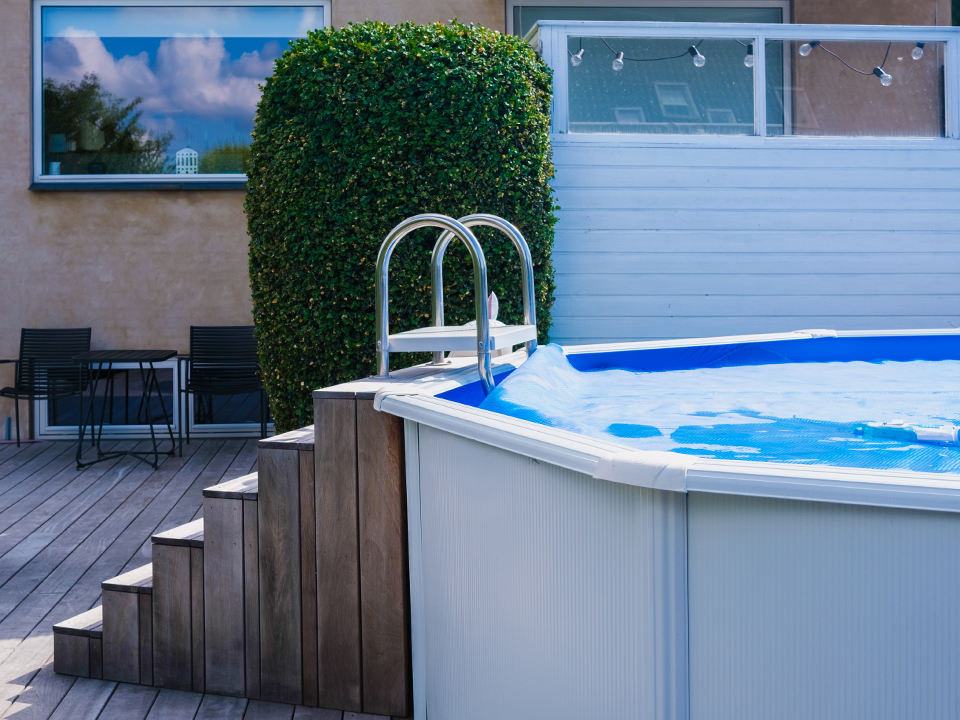
CI C10
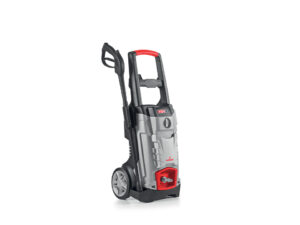
For cleaning an above-ground pool, it is advisable to use a compact and easy-to-control pressure washer, avoiding excessive pressure that could damage the lining or the pool walls.
CI C10 is the most compact cold water pressure washer in the Comac range. Its induction motor ensures reliable and quiet operation, while the compact design makes it practical to use and easy to move around the pool area. It is still important to maintain an adequate distance between the nozzle and the surface and to use controlled pressure to prevent potential damage to more delicate materials.
Pool components: how to clean them
Cleaning a pool does not only involve the floor and walls of the basin. Several additional components can also accumulate dirt, limescale, and organic residues over time and therefore require regular maintenance. Taking care of these elements helps keep the entire pool area cleaner, safer, and more pleasant to use.
Pool edge
The pool edge is one of the areas where limescale, sunscreen residues, and dirt carried from outside tend to accumulate most easily. In these cases, a pressure washer can be used while maintaining an adequate distance from the surface and adjusting the pressure according to the type of flooring. For more stubborn stains, it may be helpful to apply a specific detergent before rinsing, avoiding concentrating the jet directly on the joints between the tiles.
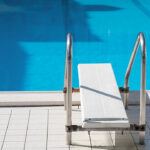
Pool ladder and diving board
Scalette e trampolini sono costantemente a contatto con acqua e umidità e possono diventare scivolosi a causa di alghe o residui organici. Un passaggio con idropulitrice a pressione moderata aiuta a rimuovere lo sporco dalle superfici antiscivolo. È consigliabile prestare attenzione ai punti di fissaggio e alle parti metalliche, evitando getti troppo ravvicinati.
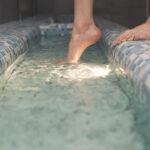
Foot rinse basin
The foot rinse basin helps reduce the amount of dirt entering the pool, but for this reason it tends to accumulate soil and residues. Regular cleaning with the pressure washer’s water jet makes it possible to quickly remove the deposits that build up on the bottom.
Outdoor shower
In outdoor showers, the main issue is often limescale that builds up on showerheads and metal surfaces. A light pressure washer jet can help remove surface residues. If more visible scale deposits are present, it is advisable to first apply a descaling product.
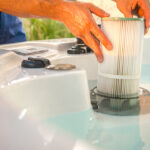
Pool filter
The filter plays a fundamental role in keeping the water clean. During maintenance operations, it is possible to clean the external housing and the accessible parts of the system. However, it is important to avoid using high-pressure jets directly on the more delicate filtering elements.
How to clean the pool liner and walls
The liner is one of the most common finishes used in private pools because it provides reliable waterproofing and good durability over time. However, pools with a liner require particular care during cleaning.
When using a pressure washer, it is important to avoid directing the jet too closely or concentrating it on the same spot for too long. Excessive pressure could damage the material or cause small deformations.
To work safely, it is advisable to:
- maintain a distance of at least 50 cm between the nozzle and the surface;
- preferably use a fan nozzle to distribute the water flow more evenly;
- • proceed with steady, regular movements from top to bottom.
If persistent stains or algae are present, it can be helpful to apply a detergent specifically designed for pools before rinsing with pressurized water.
How to clean the pool after winter
At the end of winter, the pool may contain accumulations of leaves, sediment, and debris that have settled during the period of inactivity. A thorough cleaning before reopening the pool for the season is essential to restore it to optimal condition.
The main steps are:
- Remove larger debris, such as leaves and branches that have settled on the bottom.
- Completely drain the pool, if necessary, in order to clean the surfaces properly.
- Clean the walls and bottom using a pressure washer, keeping an appropriate distance from the surface.
- Check the filtration system, verifying the condition of the filter and pumps.
- Refill the pool and rebalance the chemical parameters of the water.
This seasonal maintenance helps prevent the formation of algae and ensures clean water throughout the swimming season.
What is a pressure washer and how it works
A pressure washer is a machine that uses high-pressure water to remove dirt, algae, limescale, and other residues from surfaces. The water jet, generated by an internal pump, allows surfaces to be cleaned quickly and effectively without the need for abrasive action.
If you would like to learn more about how it works and the main technical parameters, you can read the article dedicated to the characteristics of pressure washers published here on The Comac Blog.
In Summary: how to clean a pool with a pressure washer
Cleaning a pool with a pressure washer makes it possible to remove algae, limescale, and other residues from pool surfaces quickly and effectively. To achieve the best results, it is important to follow a few basic guidelines:
- use a pressure of approximately 120 to 150 bar;
- maintain a distance of about 50 cm between the nozzle and the surface;
- adjust the jet according to the pool material (tiles, liner, or PVC);
- work from top to bottom to cover the entire pool evenly;
- complete the cleaning with a specific detergent if algae or stubborn deposits are present.
By following these recommendations, you can clean the pool effectively and safely while preserving the materials of the pool and surrounding surfaces over time.
If you would like more information on choosing the most suitable pressure washer or on the correct methods of use, you can contact us. A network of authorized Comac distributors is ready to assist you.
Frequently Asked Question
A pressure washer can be used on most types of pools, but it is important to adjust both the pressure and the distance of the jet according to the pool’s surface material. Tiled pools generally tolerate higher pressure, while pools with liner or PVC surfaces require greater caution. To avoid damage, it is advisable to use a wider spray pattern, keep a distance of at least 50 cm between the nozzle and the surface, and avoid concentrating the jet on the same area for too long.
For cleaning pool surfaces, a pressure washer with a pressure of around 120–150 bar and a flow rate of at least 400–500 l/h is generally recommended. The pressure helps detach dirt that adheres to the surfaces, while the flow rate ensures that residues are effectively rinsed away once they have been loosened.
Stubborn algae and limescale can be removed by combining mechanical action with chemical treatment. The pressure washer helps detach deposits from the pool walls and bottom, while a specific pool detergent or limescale remover helps dissolve more persistent residues. After the recommended contact time, rinse thoroughly with pressurized water to complete the cleaning process.
This post is also available in:


