

Food industry cleaning and sanitization is not just a regulatory requirement but a fundamental element in ensuring the safety and quality of consumer products. Maintaining impeccably clean environments helps protect consumer health and uphold high production standards.
In this comprehensive guide, we will explore best practices and professional Comac solutions to optimize food industry cleaning and sanitization, contributing to a safer and more efficient production process.
Regulations on sanitization in the food industry
The food industry is one of the most highly regulated sectors worldwide, with strict regulations designed to ensure the safety and quality of consumer products. Regulations such as Regulation (EC) No. 852/2004 establish specific hygiene requirements for food production, storage, and distribution environments.
These provisions outline detailed procedures for cleaning and sanitization of surfaces, the use of appropriate equipment, and constant monitoring of hygienic conditions. The primary goal of these regulations is to prevent food contamination, thereby protecting consumer health and maintaining high-quality standards at every stage of the food supply chain.
HACCP Protocols for Sanitization
One of the pillars of food safety is the HACCP system (Hazard Analysis and Critical Control Points), which helps businesses identify, assess, and control food safety hazards. Compliance with these protocols ensures a hygienic environment and reduces the risk of contamination.
For a detailed overview of HACCP procedures we recommend consulting official sources such as the dedicated page on the Italian Ministry of Health website.
Difference between cleaning and sanitization
We have already discussed the difference between disinfection and sanitization in this post, highlighting how each phase of the process is crucial for ensuring safe and compliant environments.
In the food industry, this distinction is even more critical, as cleaning focuses on the removal of visible dirt, such as food residues, grease, and dust, while sanitization involves more in-depth processes aimed at eliminating potentially harmful microorganisms. Cleaning and sanitization in the food industry are thus interconnected: cleaning is the essential first step to ensure a compliant hygienic environment, but it is not enough on its own.
Without proper sanitization, the risk of contamination and bacterial proliferation remains high.
In the following paragraphs, we will examine in detail cleaning and washing (Phase 1) and disinfection (Phase 2), exploring Comac cleaning solutions for the food industry designed to ensure clean and safe environments in this sector.
Phase 01: cleaning and washing
As previously mentioned, cleaning in the food industry is the first essential step to ensuring safe environments. In this phase, the goal is to remove visible dirt, such as food residues, oils, and grease, which could promote bacterial growth and compromise hygiene standards. To achieve effective results that comply with health regulations, it is crucial to rely on professional equipment designed specifically for these needs.
When it comes to deep surface cleaning in the food industry, floor scrubbers offer the most effective solution. They efficiently remove dirt in a single pass, ensuring a higher level of hygiene and safety while allowing production activities to continue without disruption.
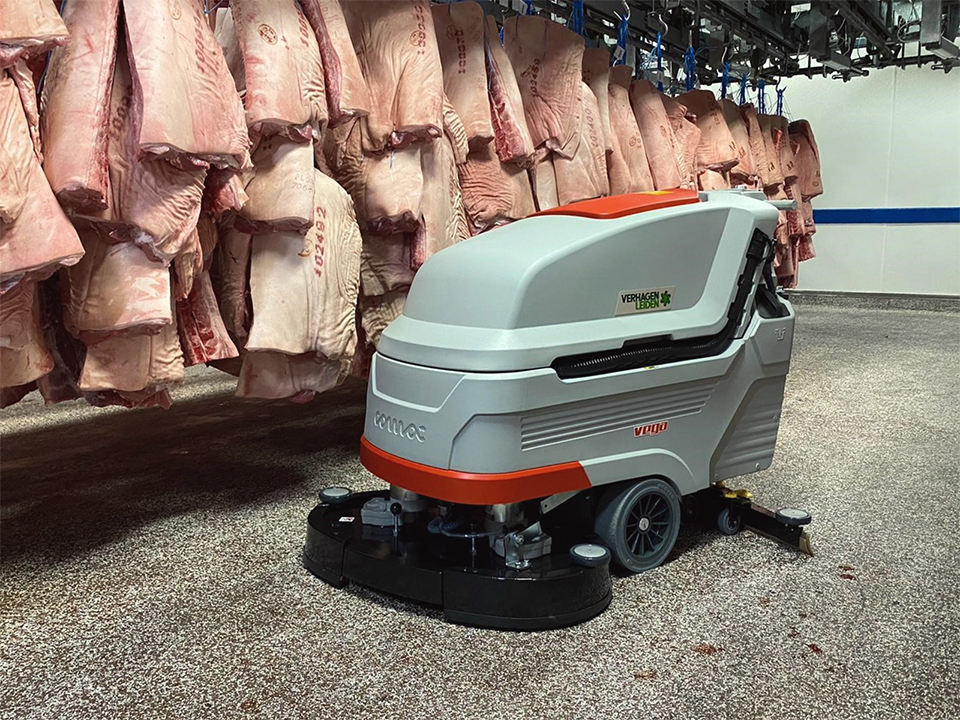
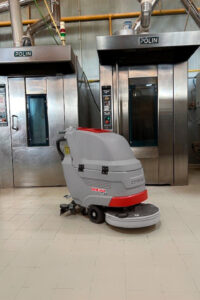
Antea: compact and effective in tight spaces
Antea floor scrubber is the ideal choice for cleaning small to medium-sized areas in the food industry. Its compact design allows it to navigate effortlessly between machinery and shelving, ensuring precise cleaning even in the tightest spaces.
Additionally, Antea can be equipped with CCP – Comac Corrosion Protection, an exclusive Comac technology that safeguards the most exposed metal components from corrosion. This treatment is particularly beneficial in high-risk environments with corrosive agents, such as fish markets, dairies, slaughterhouses, and food processing labs.
The CCP thermoplastic coating makes metal surfaces resistant to aggressive detergents, salt mist, and pollutants, extending the machine’s lifespan while maintaining high cleaning performance over time.
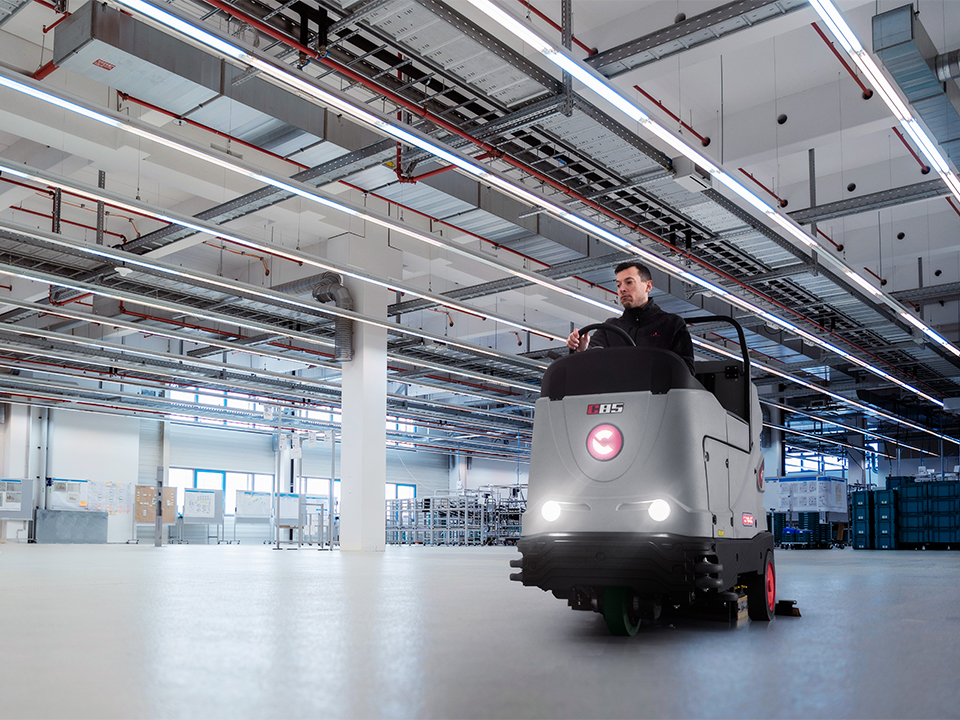
C85: maximum productivity for industrial cleaning in the food industry
For cleaning and sanitizing large surfaces in the food industry, the C85 ride-on industrial floor scrubber is the perfect solution. Designed to deliver high performance, reliability, and safety, the C85 ensures impeccable results even in environments subject to strict hygiene regulations.
Equipped with advanced cleaning technologies, the C85 allows operators to work more efficiently, reducing intervention times and optimizing operating costs. Its robust and intelligent design makes it ideal for tackling tough dirt in the food industry and operating in complex environments such as production areas, warehouses, and logistics hubs.
Thanks to its powerful scrubbing and suction system, the C85 effectively removes grease, oil residues, and organic dirt, leaving surfaces perfectly clean and dry to ensure a safe working environment. With a cleaning capacity of up to 12,000 m², it is the ideal solution for companies that require a fast, reliable, and regulation-compliant cleaning system for the food sector.
Phase 2: disinfection
After cleaning and washing, the next essential step to ensure safe environments in the food industry is disinfection. This process aims to eliminate pathogenic microorganisms from surfaces, minimizing the risk of contamination and ensuring compliance with hygiene and sanitary regulations.
The effectiveness of disinfection depends on several factors, including the correct application of disinfectants, the contact time with surfaces, and the use of appropriate equipment. To achieve the best results, it is crucial to choose professional cleaning solutions specifically designed for the food industry, ensuring high safety standards without compromising operational efficiency.
E-Spray: uniform disinfection without waste
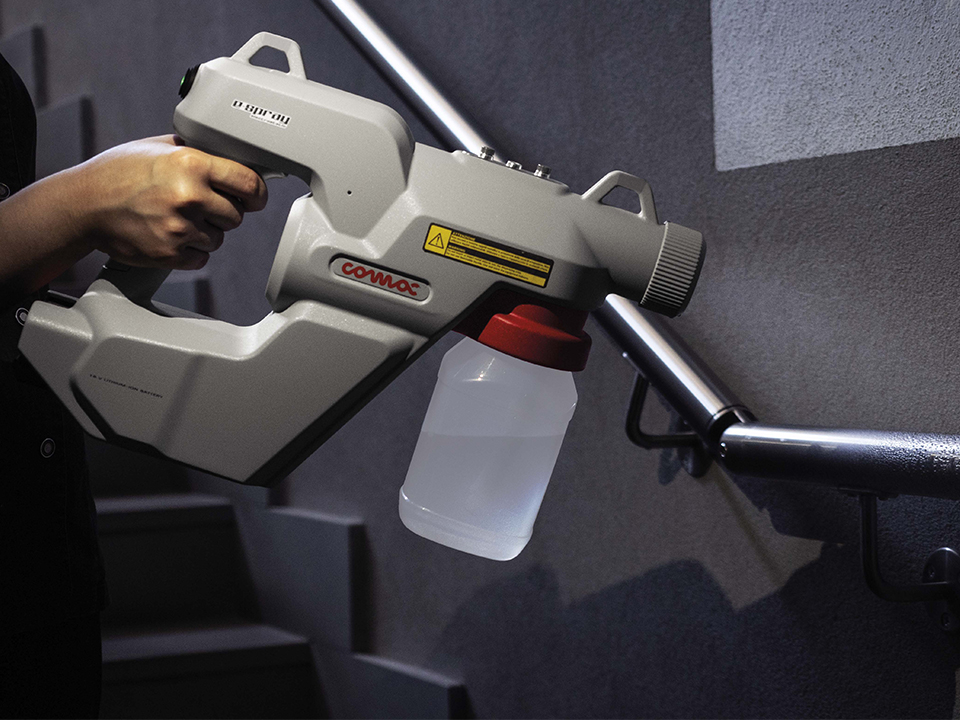
Comac E-Spray Electrostatic is an electrostatic spray gun designed to distribute disinfectant solutions effectively and evenly. Using the principle of electrostatic induction, the disinfectant droplets receive an electrostatic charge, which attracts them to the targeted surface, creating a complete and homogeneous sanitizing coating.
E-Spray is particularly suitable for sanitizing surfaces in the food industry, including worktops, equipment, and production areas. Powered by a lithium battery, it allows cord-free operation, ensuring continuous use for several hours.
The ultra-light misted micro-droplets generated by E-Spray can reach even the most difficult areas, ensuring uniform disinfectant application, reducing waste, and enhancing sanitization effectiveness.
Sanex: compact and versatile sanitizer
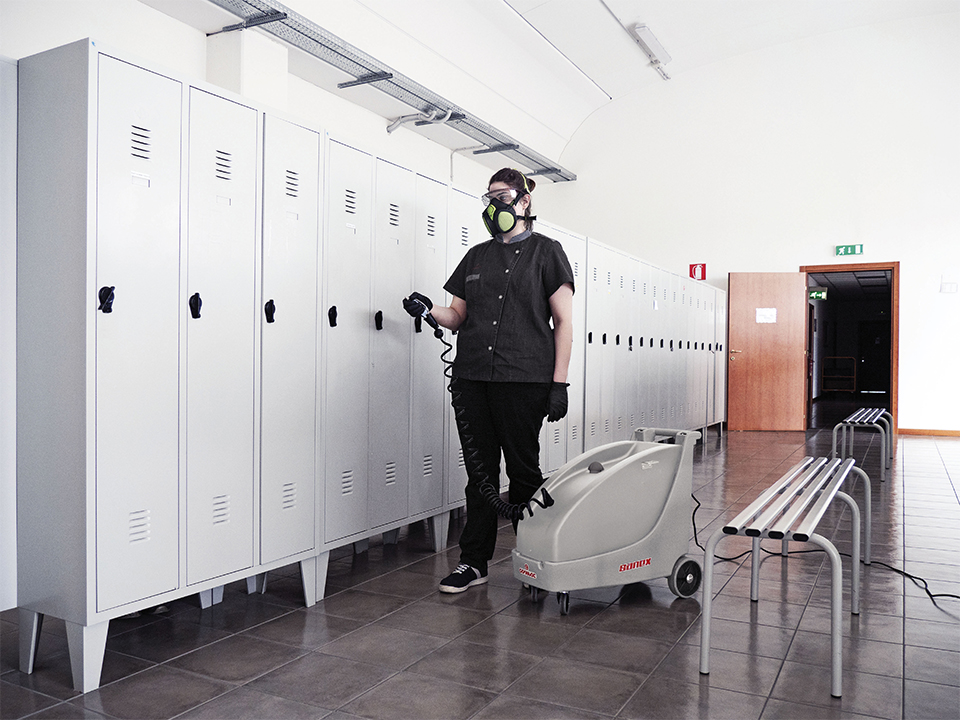
For disinfecting small and medium-sized environments in the food industry, Sanex is the ideal solution. This compressor-based sanitizer is designed to nebulize sanitizing, disinfecting, and deodorizing products, making it perfect for various food industry needs.
Sanex is lightweight, easy to transport, and also available in a battery-powered version, offering maximum freedom of movement. It can be used to sanitize kitchens, packaging areas, processing rooms, and storage spaces. Additionally, its versatility makes it perfect for vehicle interiors and air conditioning systems, ensuring comprehensive hygiene in any environment.
Conclusions
The combined use of professional cleaning and disinfection equipment for the food industry is essential to maintaining high hygiene standards in these environments. Comac solutions—such as Antea, C85, E-Spray Electrostatic, and Sanex—ensure an efficient and regulation-compliant sanitation process, protecting consumer safety while optimizing productivity.
If you would like to learn more or discover the best solutions for your needs in food industry cleaning and sanitization, contact us: a network of authorized Comac distributors is at your disposal.
This post is also available in:


