

When a floor scrubber is not dispensing water, you can often identify the cause by carrying out a few simple checks, without immediately having to contact technical support. In professional floor scrubbers, the first four components you should check are the solution tank, the solution tap, the filter and the hoses. Only after ruling out these possible causes should you consider a malfunction of the solenoid valve or pump.
In this guide, you will discover why a floor scrubber is not dispensing water, how to identify the main signs of the problem and which checks you can carry out to restore the correct solution flow. We will start by looking at how the solution dispensing circuit works and then analyse, on by one, the most common causes and their solutions, also explaining when it is necessary to contact technical support.
To learn more about other issues that may affect a floor scrubber, read the article on the 6 most frequently asked questions when a floor scrubber malfunctions.
Table of contents
- How the solution dispensing circuit works in a professional floor scrubber
- 1. Empty solution tank
- 2. Closed or partially open solution tap
- 3. Solution filter clogged with limescale or residues
- 4. Blocked or kinked solution hose
- 5. Faulty solenoid valve or solution pump
- Best practices: how to prevent solution dispensing blockage
- Frequently asked questions about floor scrubbers not dispensing water
How the solution dispensing circuit works in a professional floor scrubber
To understand why a floor scrubber is not dispensing water, it is useful to first understand how the cleaning solution dispensing circuit works. In professional floor scrubbers, water is added to the solution tank, where you can mix it with detergent according to the recommended instructions. From there, the solution passes through the dispensing system and is distributed towards the brush head and brushes, which use it during the cleaning process. Depending on the machine configuration, the circuit may include several components, including:
- Solution tank
- Tap or solution flow dispensing system
- Solenoid valve and/or solution pump
- Solution filter
- Solution distribution hoses
- Solution outlets near the brushes
It is important to distinguish the solution tank from the recovery tank. The solution tank contains the cleaning solution used for washing, while the recovery tank collects the dirt water vacuumed from the floor together with the residues.
Knowing how this circuit works makes it easier to identify the point where the flow is interrupted. To learn more about how the machine works in general, also read the article how does the floor scrubber work?
Quick summary of the 5 causes of water dispensing failure: checklist
When a floor scrubber is not dispensing water, you can start by carrying out the simplest and most accessible checks.
| Cause | Detectable symptom | Quick action | Can it be resolved without technical support? |
| Empty solution tank | The brushes are dry and no water is reaching them from the system | Check the level and fill the tank according to the manufacturer’s instructions | Yes |
| Closed solution tap (flow set to zero) | No solution is dispensed even though the tank is full | Check the tap and the flow setting | Yes |
| Clogged solution filter | The flow gradually decreases or is insufficient | Check and clean the filter according to the instructions in the manual | Yes |
| Kinked or blocked hose | No, or very little flow despite the tank and filter working correctly | Check the hose routing and remove any kinks | Yes, for simple kinks; if it is blocked, technical support may be required |
| Faulty solenoid valve or solution pump | No solution dispensing, with or without the characteristic click | Requires a technical inspection of the component | No |
1. Empty solution tank
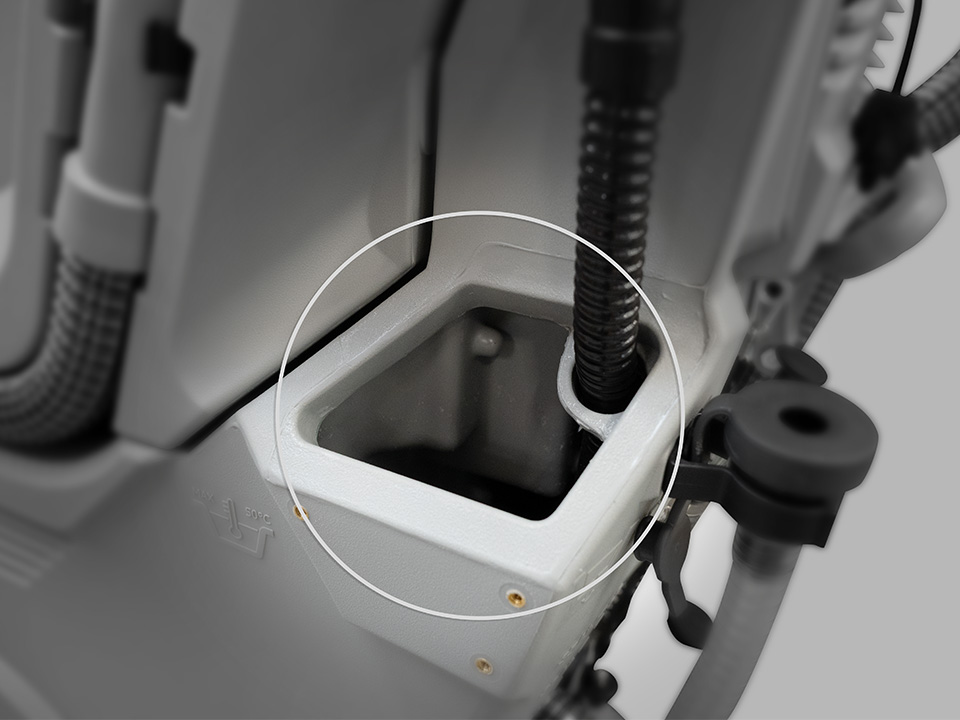
The first check to perform when a professional floor scrubber is not dispensing water concerns the solution tank.
During daily operations, especially in cleaning companies and environments where machines are used across multiple shifts, the solution tank may be filled by different operators. An insufficient solution level or failure to refill the tank after the previous work session can therefore be one of the simplest causes of a lack of solution dispensing.
Before carrying out any other checks, control the solution level directly in the tank or on the machine indicator, if available.
2. Closed or partially open solution tap
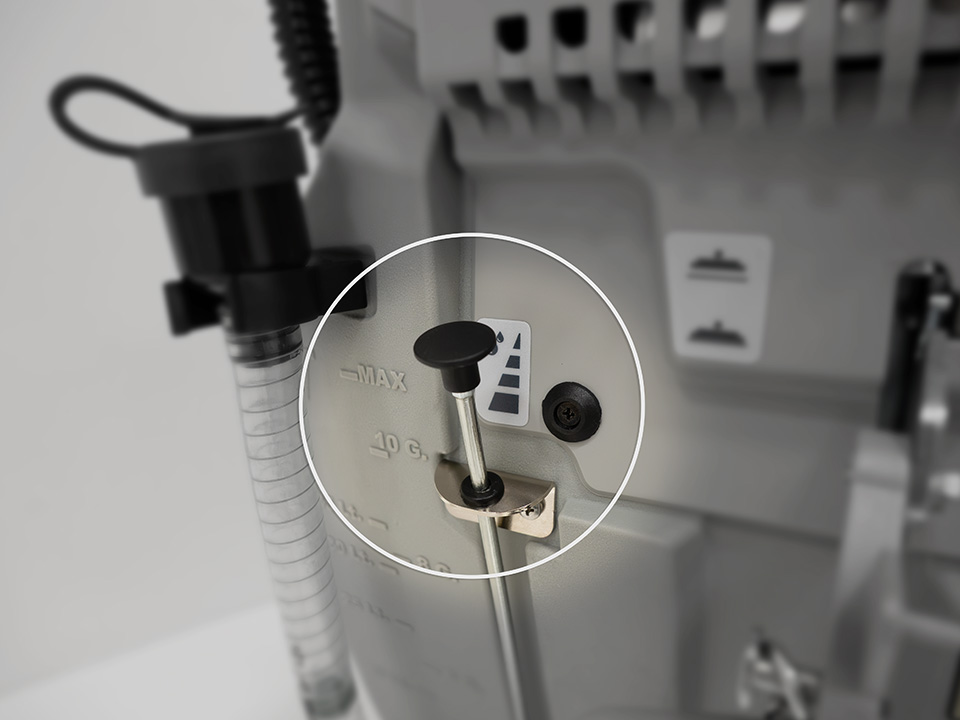
If the tank is full but the floor scrubber is not dispensing water, the next check concerns the solution flow dispensing system. During maintenance, cleaning or moving the machine, you may have closed the tap without reopening it or only partially reopened it. On machines equipped with electronic solution dispensing systems, the flow may also have been set to the minimum level or to zero.
This check is very important when a problem appears suddenly after maintenance work or a shift change.
3. Solution filter clogged with limescale or residues
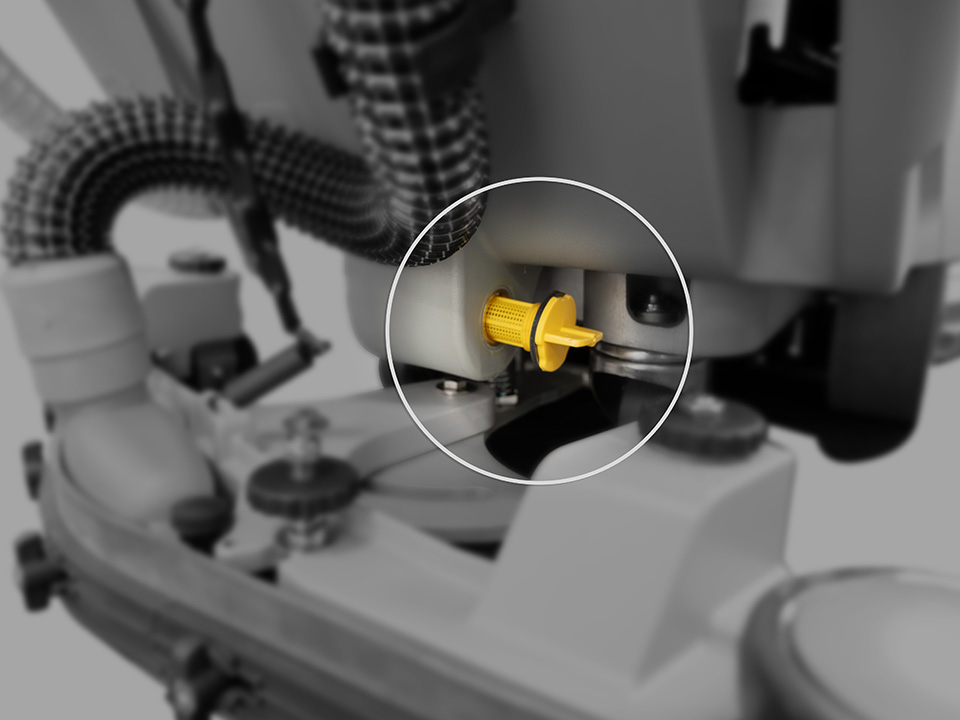
The solution filter is designed to retain impurities and residues in the circuit before they reach the dispensing components.
When the filter becomes clogged, the amount of solution reaching the brushes may gradually decrease until it becomes insufficient. For this reason, it is very important to check the condition and cleanliness of the filter and, if necessary, carry out the required maintenance operations.
Before checking the filter, turn off the water supply to prevent unexpected leaks during inspection. If the filter is completely worn, replace it if necessary.
4. Blocked or kinked solution hose
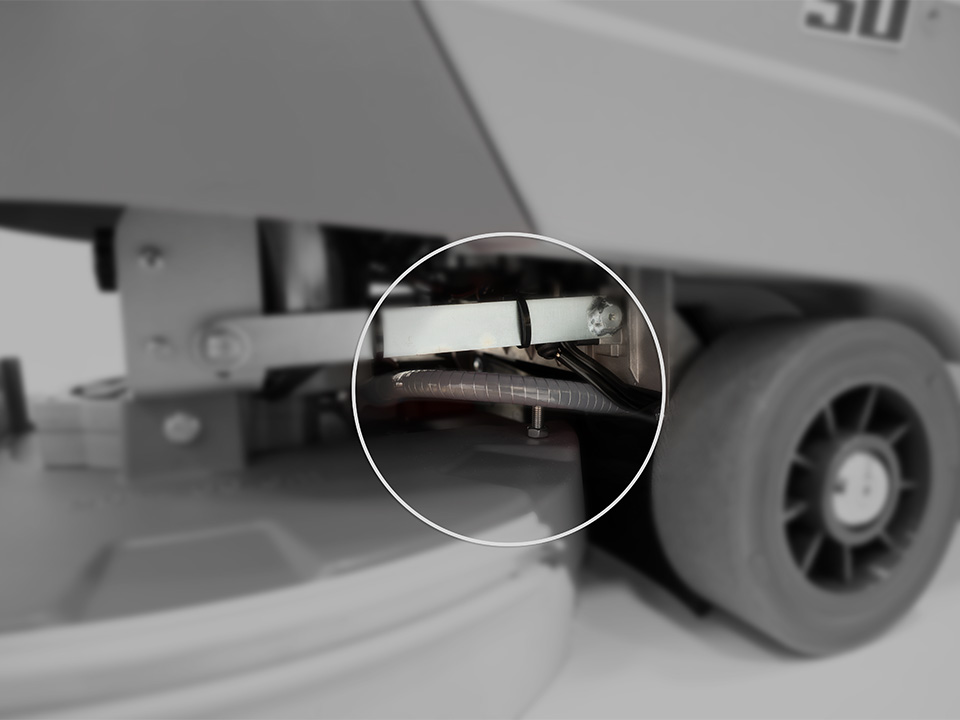
A kinked, crushed or blocked hose reduces or interrupts the flow of the solution. Internal blockages, on the other hand, can occur when detergent residues build up together with dirt. To prevent them, clean the hose regularly and replace it if it is completely blocked.
To identify a possible problem, visually inspect the accessible sections of the hoses and check that they are not: blocked, kinked, disconnected or damaged.
If a hose has a visible kink, the flow may be restricted even if all the other components of the circuit are working correctly.
If the hose appears intact but the water still does not flow, the blockage may be inside the circuit. In this case, avoid improvised repairs that could damage the hoses or the components.
In addition to checking the condition of the hoses, it is very important to make sure that they are properly connected to the fitting to prevent liquid leaks that could cause uneven solution dispensing onto the brushes.
5. Faulty solenoid valve or solution pump
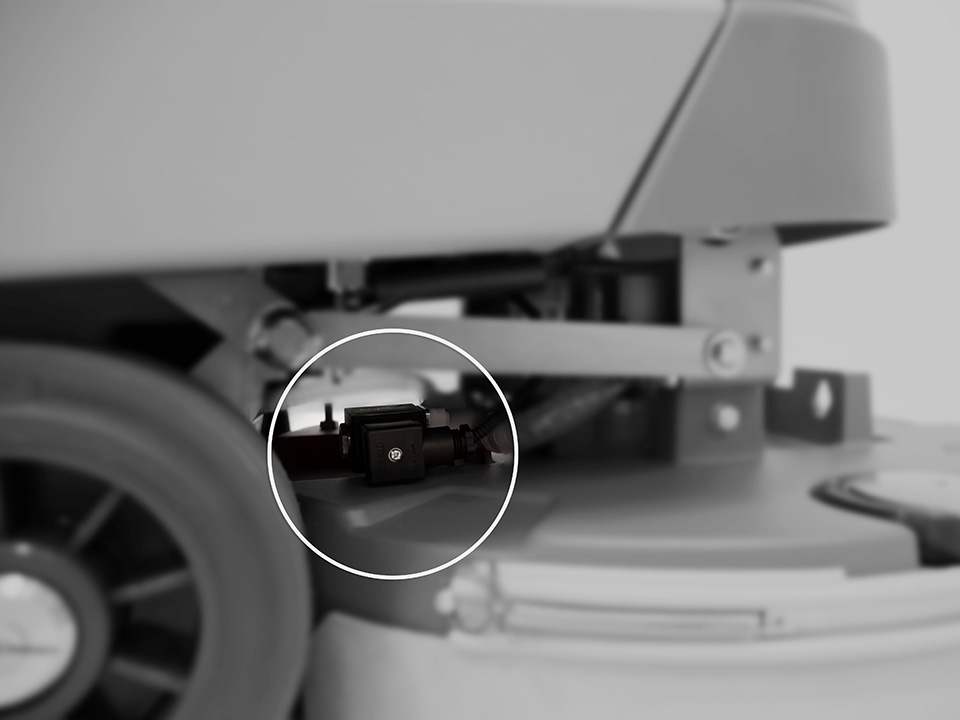
If the previous checks have not revealed any problems and the floor scrubbers is still not dispensing water, the issue may be related to one of the components that control or supply the solution flow, such as the solenoid valve or the solution pump. The solenoid valve controls the water flow and opens when you activate solution dispensing. During normal operation, the valve opening may be accompanied by a characteristic small click. If the solenoid valve is faulty or does not open correctly, it may prevent the water from flowing and cause solution dispensing to stop.
It is also important to check that the solution pump is working correctly. Its function is to supply the circuit and ensure the correct solution flow. A pump failure or an electrical fault may prevent or impair water dispensing. If you experience problems with these components, do not carry out maintenance work yourself. To prevent damage to the machine and ensure that the work is carried out correctly and safely, contact the technical support service.
Best practices: how to prevent solution dispensing blockage
Preventing blockages and faults in the solution dispensing circuit helps maintain more consistent floor scrubber efficiency, and reduce the risk of machine downtime.
In professional environments with multiple operators and intensive machine use, it is particularly important to establish simple and shared maintenance procedures.
Key best practices include:
- Empty and clean the solution tank after use, following the manufacturer’s procedures and avoiding leaving solution residues inside the machine for long periods.
- Use detergents suitable for professional floor scrubbers, following the recommended dosage and the manufacturer’s compatibility instructions.
- Regularly check the solution filter, adjusting the cleaning frequency according to operating hours, water quality and working conditions.
- Rinse the solution circuit when required by the maintenance procedures, especially before extended periods of inactivity.
- Check the hoses to make sure they are not kinked, crushed or damaged.
- Train operators on the correct procedures for filling, using, cleaning and maintaining the machine.
Regular maintenance allows you to address minor issues before they develop into more complex problems and helps keep the solution dispensing system efficient.
Frequently asked questions about floor scrubbers not dispensing water
Why doesn’t the floor scrubber wet the brushes even when the solution tank is full?
If the solution tank is full but the floor scrubber is not wetting the brushes, check the solution path from the tank to the brush head. The most common causes are a closed solution tap, a flow setting that is too low or set to zero, a clogged solution filter, or a kinked or blocked hose. If these checks do not reveal any problems, the issue may concern a component of the dispensing system, such as a solenoid valve, pump or electronic control board. In this case, technical support is required.
How often should the solution filter of a professional floor scrubber be cleaned?
There is no universal interval that applies to all professional floor scrubbers. The frequency with which the filter should be cleaned depends on the machine model, operating hours, water quality, detergent used and working conditions. As a good practice, check and clean the filter regularly, following the instructions provided in the use and maintenance manual.
The floor scrubber is dispensing too little water: is the diagnosis the same as when no water is dispensed?
Not necessarily. A reduction in water flow may be the first sign of a partially clogged filter, a partially blocked hose or an unsuitable flow setting. For this reason, always start with the simplest checks and progressively work your way through the solution circuit.
Can I use any floor detergent in a floor scrubber?
No. In professional floor scrubbers, you must use low-foaming detergents that are compatible with the machine and the type of surface being cleaned. Unsuitable products, excessive dosage or detergents that produce a high amount of foam may affect the correct operation of the machine and increase the build-up of residues inside the circuit. To choose the right detergent and dosage, follow the instructions provided by the machine manufacturer and the detergent manufacturer.
This post is also available in:


