

An industrial vacuum cleaner is a high-performance professional vacuum designed for intensive use in environments such as production facilities, logistics warehouses, mechanical workshops and construction sites. These are all areas where it is often necessary to handle fine dust, process residues and potentially hazardous materials, using equipment capable of operating continuously and reliably.
The key difference between industrial vacuum cleaners lies in the type of material to be collected: specific models are available for dry dust and debris (Dry), liquids (Wet), or combined applications involving both liquids and solids (Wet&Dry). Another distinctive feature is represented by ATEX-certified versions for potentially explosive environments, designed to support safe operation in accordance with the conditions specified by the certification, when handling combustible dust or working in potentially hazardous areas.
This guide has been created to explain the main technical features that define this category of machines, from filtration classes to specific solutions designed for hazardous environments.
Table of contents
- What is an industrial vacuum cleaner and how does it differ from a domestic vacuum cleaner?
- Filtration classes L, M and H: what they mean and how to choose the right one
- ATEX industrial vacuum cleaner: when a certified model is required
- How to choose the right industrial vacuum cleaner: key selection criteria
- Type of material to be collected: fine dust, liquids or hazardous residues
- Work cycle intensity: occasional cleaning or continuous operation
- Volume of collected material: the impact of tank capacity
- Space and mobility: compact, wheeled or fixed models
- Use cases and applications: the ideal configuration for every sector
- Frequently asked questions about industrial vacuum cleaners
What is an industrial vacuum cleaner and how does it differ from a domestic vacuum cleaner?
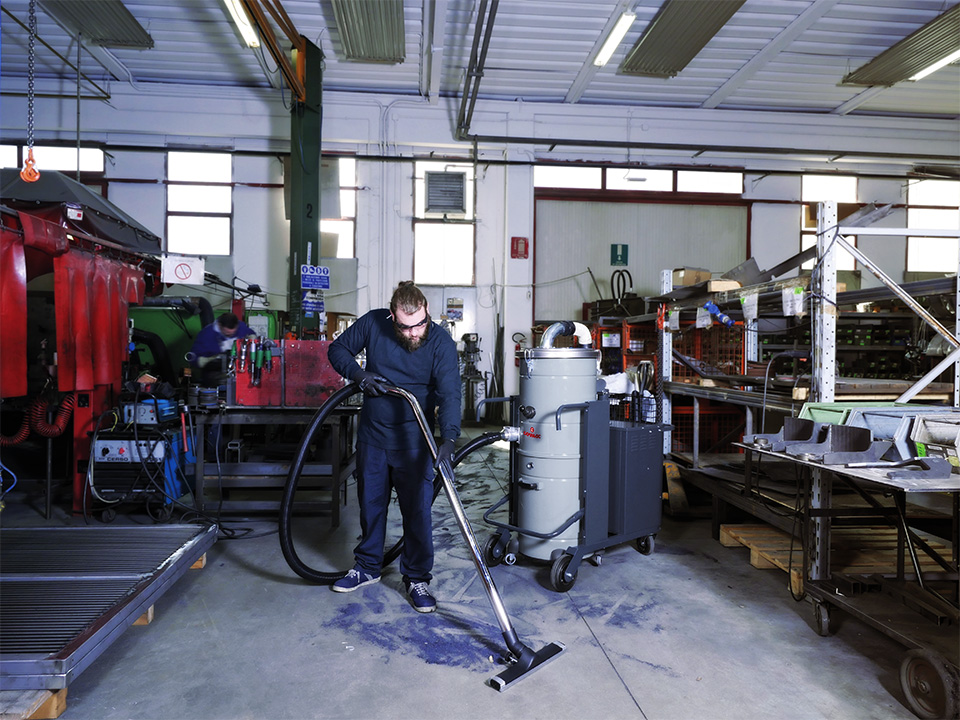
An industrial vacuum cleaner is a professional machine designed to collect dust, solid debris and, in Wet&Dry versions, liquids as well. Compared to domestic vacuum cleaners, it features a more robust structure, high-vacuum motors and large-capacity tanks designed to handle even the most demanding working conditions.
One of the key elements that distinguishes industrial vacuum cleaners from common domestic models is the filtration system. Industrial vacuum cleaners are specifically designed to manage more complex working conditions and effectively retain even fine, micro and potentially hazardous dust, preventing its dispersion into the environment and reducing the risk of operator exposure.
Domestic vacuum cleaners, on the other hand, are designed for routine cleaning in residential environments and generally do not feature the filtration systems, containment capacity or structural characteristics required to handle industrial residues or potentially harmful materials.
Technical comparison: differences between domestic vacuum cleaners, industrial vacuum cleaners and wet vacuum cleaners
To correctly evaluate the value of an investment in professional equipment, it is essential to compare the construction features and real operating performance of the different types of vacuum cleaners available on the market. Domestic models are designed for occasional use and limited workloads, while industrial solutions, both for dry dust and mixed debris, are developed to ensure continuous operation, high resistance and filtration systems certified according to specific standards.
Filtration classes L, M and H: what they mean and how to choose the right one
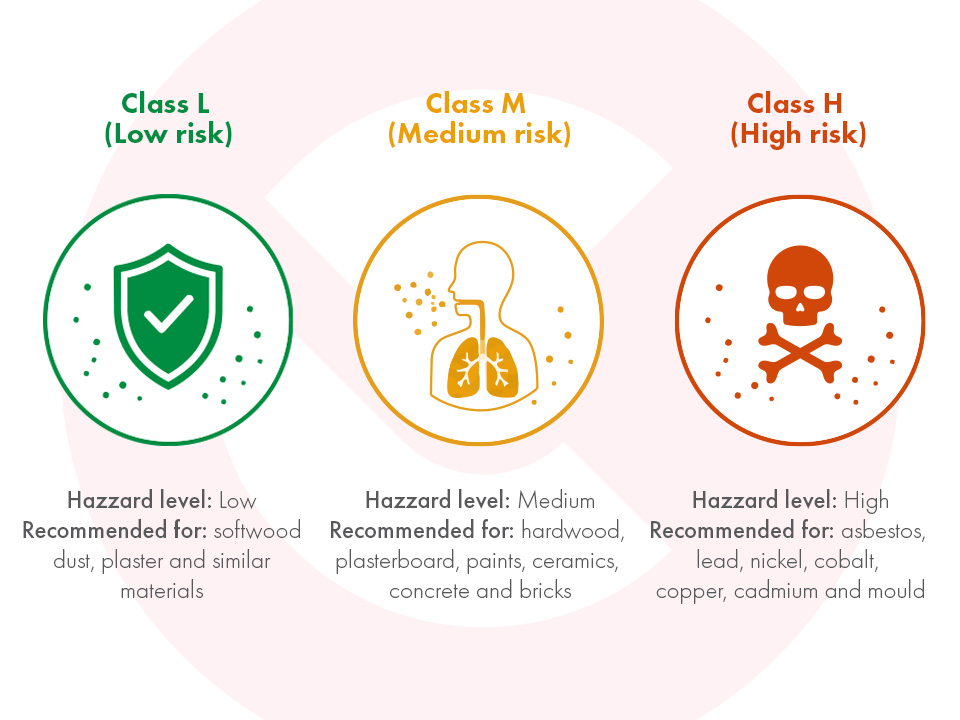
Dust is assigned to L, M or H filtration classes according to the level of risk it represents. This classification helps determine which types of dust can be safely collected and which precautions should be adopted during use and waste disposal.
Class L vacuum cleaners: for low-risk dust
Class L vacuum cleaners are designed for collecting dust considered to pose a low health risk. They are mainly used for extracting materials such as softwood dust, plaster and similar materials. This category is suitable for general applications where no particularly hazardous substances are present. The collected dust does not require specific disposal procedures, although the equipment must still be used correctly to ensure a clean and safe working environment.
Class M vacuum cleaners: for medium-risk dust
Class M vacuum cleaners provide a higher level of protection than Class L vacuum cleaners and are designed to collect medium-risk hazardous dust. They are ideal for materials such as hardwood, plasterboard, concrete, bricks, ceramics and paint dust, making them the preferred choice for construction sites, workshops and industrial facilities. In many professional construction applications, a Class M industrial vacuum cleaner is the minimum requirement to safely capture dust generated during cutting, sanding, drilling and other material processing operations, helping reduce airborne particles and improve workplace safety.
Class H vacuum cleaners: for highly hazardous dust
Class H vacuum cleaners are designed for handling the most hazardous types of dust and provide the highest level of filtration required by regulations. They are used when it is necessary to collect harmful or toxic substances such as asbestos, lead, nickel, cobalt, copper, cadmium and mould. Thanks to their high-efficiency filtration systems, these vacuum cleaners allow operators to work safely even in environments where preventing the dispersion of harmful particles into the air is essential.
ATEX industrial vacuum cleaner: when a certified model is required
Among the different types of industrial vacuum cleaners, ATEX models are designed for use in environments where potentially explosive atmospheres may be present. Specifically, ATEX is the acronym for ATmosphères EXplosives and identifies the set of European regulations governing the use of equipment in potentially explosive environments.
An ATEX industrial vacuum cleaner is therefore required in areas where potentially explosive atmospheres may form due to the presence of combustible dust or flammable substances, such as flour, sugar, wood, coal, metal dusts such as aluminium, gases or vapours. The choice of an ATEX-certified vacuum cleaner depends on the risk assessment and the classification of the working area; however, in these environments it is essential to use equipment designed to reduce the risk of ignition and ensure safe operation. In this field, Comac offers a range of ATEX-certified industrial vacuum cleaners, also suitable for Dust Zone 22 applications.
How to choose the right industrial vacuum cleaner: key selection criteria
Choosing an industrial vacuum cleaner cannot be based only on price. To identify the most suitable solution, it is necessary to evaluate the overall operating environment. Before comparing the technical features of different models, it is therefore essential to analyse four key factors that help guide the choice towards the most suitable vacuum cleaner for specific production requirements.
- Type of material to be collected: solids, liquids, fine dust, hazardous substances or flammable materials require specific suction and filtration features.
- Work cycle intensity: it is important to assess whether the vacuum cleaner will be used occasionally or for continuous and intensive operations, including 24/7 shifts.
- Volume of collected material and size of the working area: these factors determine the required container capacity, operating autonomy and frequency of emptying.
- Logistics and mobility requirements: working spaces and operational flows influence the choice between compact, wheeled or fixed models.
Let’s now take a closer look at how each of these factors affects the choice of the most suitable industrial vacuum cleaner.
Type of material to be collected: fine dust, liquids or hazardous residues
The first aspect to consider when choosing an industrial vacuum cleaner is the type of material to be collected. Each type of residue has different characteristics and requires a machine with suitable performance levels and filtration systems.
When collecting fine dust, the use of high-efficiency filters is essential to retain even the smallest particles and prevent their dispersion into the environment. When dealing with liquids, it is necessary to choose specific vacuum cleaners equipped with suitable containers and dedicated safety devices. If the application involves the collection of hazardous, toxic or flammable materials, it is essential to use certified vacuum cleaners that comply with current regulations, such as ATEX models for potentially explosive environments.
Work cycle intensity: occasional cleaning or continuous operation

The second element to consider when choosing an industrial vacuum cleaner is the frequency and intensity of use. A model designed for occasional cleaning operations, such as the periodic removal of residues from production areas, has different requirements compared to a vacuum cleaner used daily within a production line.
For continuous and intensive applications, including multi-shift operations, it is necessary to choose machines designed to ensure high reliability, durable components and consistent performance over time. In these operating conditions, key aspects include structural robustness, the ability to work without frequent interruptions and ease of maintenance. Correctly assessing the work cycle helps prevent both oversizing and the use of a vacuum cleaner that is unsuitable for actual operating requirements, ensuring greater efficiency, longer machine life and continuity of production processes.
Volume of collected material: the impact of tank capacity
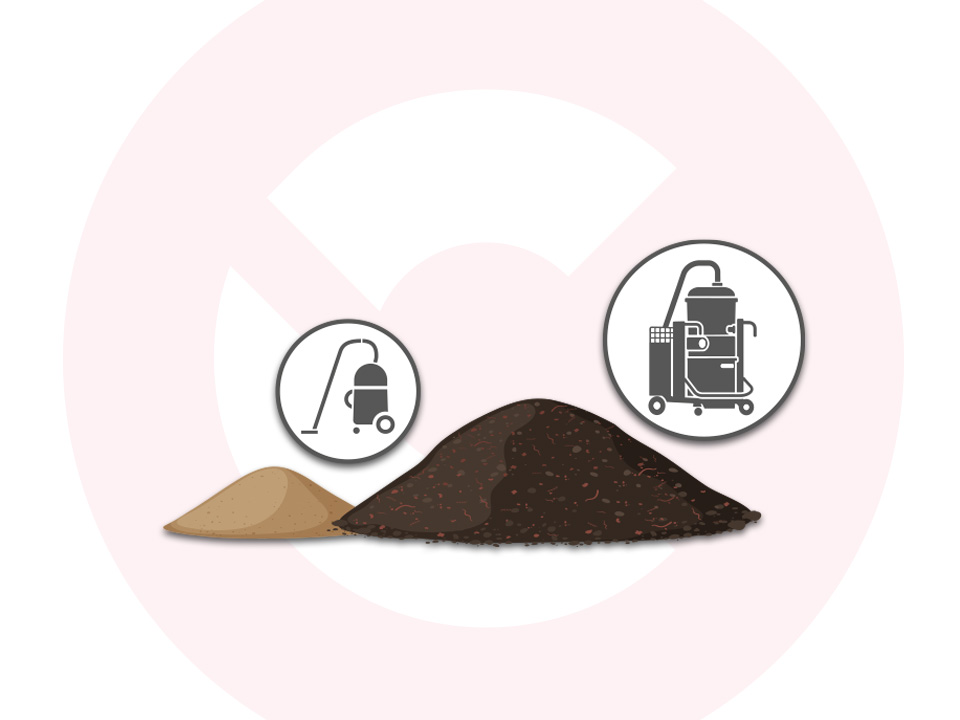
The amount of material to be collected is another key factor when selecting an industrial vacuum cleaner. The tank capacity must be sized according to the volume of residues generated during operation, ensuring high operating autonomy and reducing the need for frequent emptying. When handling large quantities of dust, chips, liquids or process residues, a larger-capacity container helps optimise intervention times and maintain more consistent productivity. On the other hand, for applications involving limited volumes or restricted spaces, a compact and easily manoeuvrable model may be the most suitable choice.
Space and mobility: compact, wheeled or fixed models

Available space and operating requirements directly influence the choice of industrial vacuum cleaner configuration. In environments with limited working areas or where the machine needs to be moved frequently, compact or wheeled models offer greater practicality and ease of handling. For applications that involve working in different areas of a facility, wheeled vacuum cleaners provide greater flexibility, adapting to the needs of production departments. Conversely, when suction needs to be integrated into continuous processes or specific workstations, a fixed solution may be more suitable, ensuring constant and reliable operation.
Use cases and applications: the ideal configuration for every sector
Each production sector has specific requirements in terms of the materials to be collected, operating intensity and working conditions. For this reason, there is no single industrial vacuum cleaner suitable for all applications.
| Environment | Typical material to vacuum | Key aspects to consider |
| Mechanical workshops | Shavings, dust, oily residues | Robustness, capacity, optional Wet&Dry function |
| Construction sites | Fine dust, cement, concrete | Filtration class, resistance, ease of transport |
| Food industry | Flour, sugar, organic dust | ATEX assessment, hygiene, safety |
| Logistics warehouses | Dust, packaging materials, dry residues | Mobility, autonomy, ease of emptying |
| Chemical or pharmaceutical industry | Sensitive or potentially hazardous dust | Filtration, containment, certifications |
Below you can find some of the most suitable Comac solutions and their main application sectors.
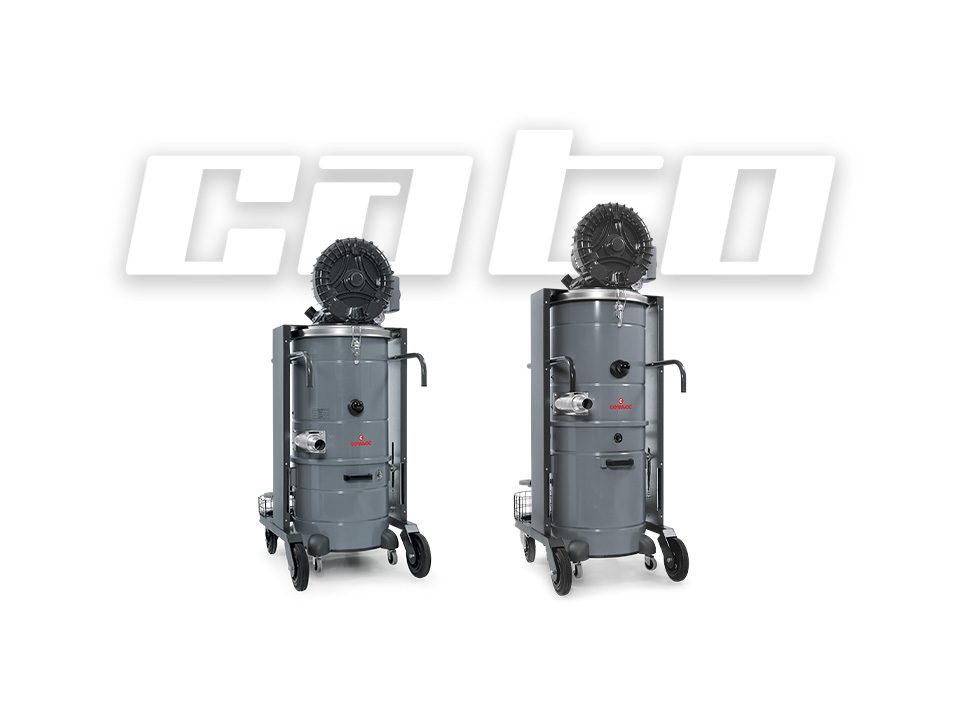
The industrial vacuum cleaners in the CA To range are equipped with a coaxial turbine with induction motor configuration installed in a vertical position, designed to ensure continuous operation and long service life without the need for periodic maintenance. The fully steel structure provides outstanding strength, making them ideal for industrial environments and intensive use in facilities such as factories, workshops and warehouses.
This family includes the CA TO 30 M and CA TO 40 M models. For both models, the wet vacuum function is available as an optional feature.
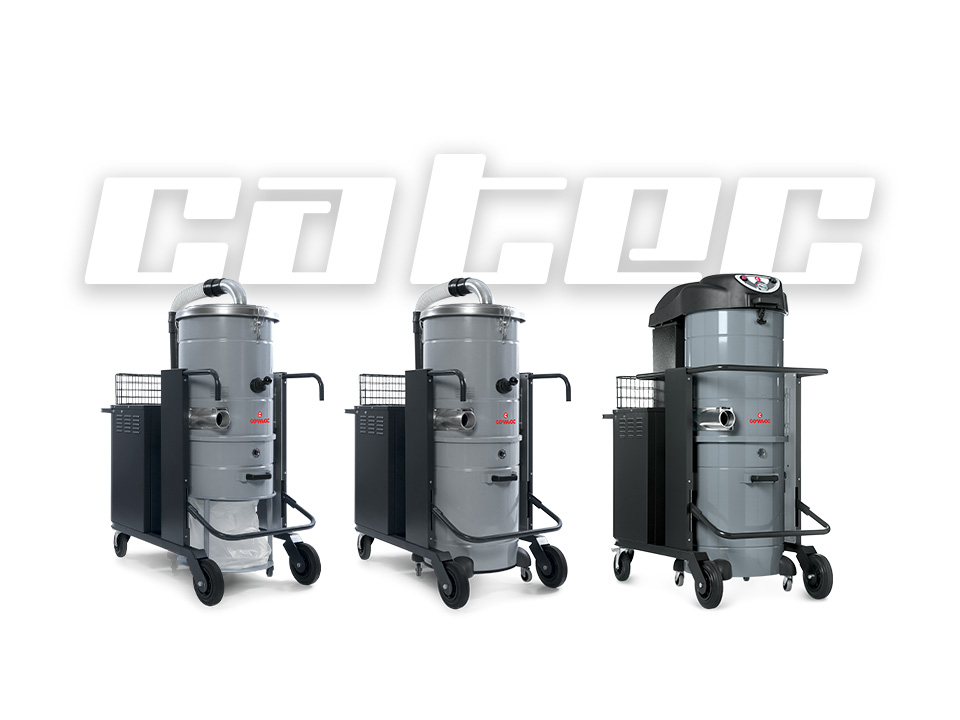
CA Tec industrial vacuum cleaners are equipped with rear-mounted coaxial turbines with induction motors, a solution that improves performance and allows the use of two-stage turbines for increased airflow. The steel structure ensures excellent solidity while maintaining high manoeuvrability. Designed for demanding applications, they are suitable for industrial, automotive, logistics and workshop applications.
This range includes the CA TEC 75P, CA TEC 75P LP, CA TEC 75S and CA TEC 75S SA models. The wet vacuum function is available as an optional feature on all models except the CA TEC 75P LP.
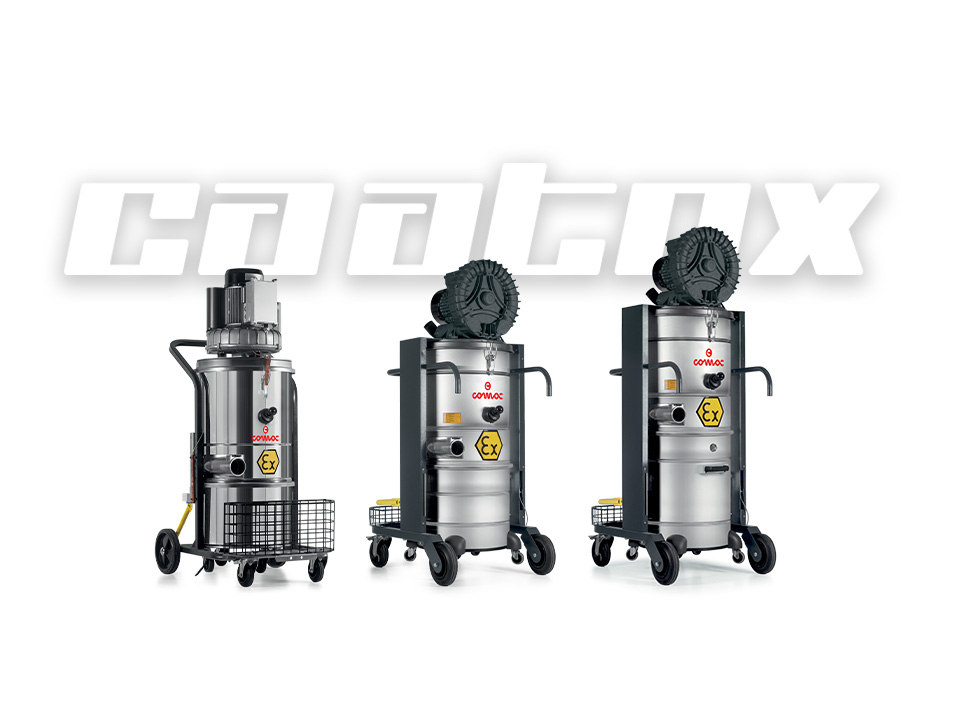
CA Atex industrial vacuum cleaners are certified for use in potentially explosive areas, such as Dust Zone 22, and are designed to support safe operation when handling potentially combustible dust. Designed to minimise risks in critical environments, they are ideal for collecting dust with low explosive hazard potential. They are used in sectors such as the chemical and pharmaceutical industries, bakeries, mills, grain and pellet warehouses, the metallurgical industry and mining.
This family includes the following models: CA ATEX22 30 XS, CA ATEX22 40 M and CA ATEX22 40 L.
For further information about the Comac range of industrial vacuum cleaners, visit the dedicated vacuum cleaner page or contact us to receive support in choosing the model that best suits your requirements.
Frequently asked questions about industrial vacuum cleaners
What is the difference between an industrial vacuum cleaner and an industrial vacuum?
In everyday use, the two terms are often used as synonyms, but there is a technical distinction. The term industrial vacuum cleaner generally refers to machines designed exclusively for collecting dry materials, such as dust and solid debris. The term industrial vacuum, on the other hand, has a broader meaning and also includes models capable of collecting both solids and liquids, as well as specific solutions for more complex applications. In professional environments, however, both definitions refer to high-performance equipment equipped with certified filtration systems (L, M or H classes) and designed for intensive and continuous use in industrial production environments.
What is the difference between an industrial vacuum cleaner and a wet vacuum cleaner?
A Dry industrial vacuum cleaner is designed exclusively for collecting dry materials: the suction of liquids or moisture can seriously compromise filters and motors, causing even irreversible damage. A Wet&Dry vacuum cleaner, on the other hand, is designed to safely handle both solids and liquids thanks to dedicated separation and protection systems. In environments where liquid leaks, wet residues or mixed debris may be present, the correct and safest choice is always a Wet&Dry model.
When should I use a Class M industrial vacuum cleaner instead of a Class L model?
A Class M industrial vacuum cleaner is used for medium-risk dust, such as that generated when processing hardwood, cement, concrete, metals and paints. Compared to Class L models, it provides a higher level of filtration and is suitable when dust may represent a significant health risk for operators.
Can an industrial vacuum cleaner be used without a bag?
Yes, many industrial vacuum cleaners can be used either with a collection bag or with a rigid container without a bag, which can be emptied manually. The choice mainly depends on the type of application and the required filtration class. For Class L applications, bagless operation is often a practical and effective solution for low-risk dust. For Classes M and H, however, the use of a collection bag is generally recommended, as it allows dust to be handled and disposed of more safely, reducing the risk of dispersion during emptying operations and providing greater protection for the operator.
Is it better to buy or rent an industrial vacuum cleaner?
The choice between purchasing and renting depends on the frequency and continuity of use. For daily or continuous applications in production environments, purchasing is the most cost-effective solution in the medium to long term, thanks to the amortisation of the investment and the constant availability of the machine. Renting, on the other hand, is ideal for occasional or temporary use, such as construction sites, extraordinary interventions or production peaks. In these cases, it provides greater flexibility and often includes maintenance and service support within the rental agreement, reducing management costs.
This post is also available in:


