

When it comes to pressure washers, the difference between effective cleaning and disappointing results often comes down to one specific factor: pressure, measured in bar. If the pressure is too low, it becomes difficult to remove stubborn dirt. If it is too high, it can damage delicate surfaces such as paintwork, wood or grout. Understanding how many bar a pressure washer should have is therefore not just a technical detail, but a key factor in choosing the right machine and using it properly.
In this guide, we take a closer look at pressure washer pressure, the differences between the main pressure ranges and the most common applications.
Table of contents
- Pressure washer pressure vs water flow: differences and how they work
- Pressure washers 100–130 bar: what they are used for
- Pressure washers 130–160 bar: uses and applications
- Pressure washers over 160 bar: when to use them
- How many bar should a pressure washer have
- What is a pressure washer and how does it work
- Frequently asked questions about pressure washers
Pressure vs water flow: what’s the difference?
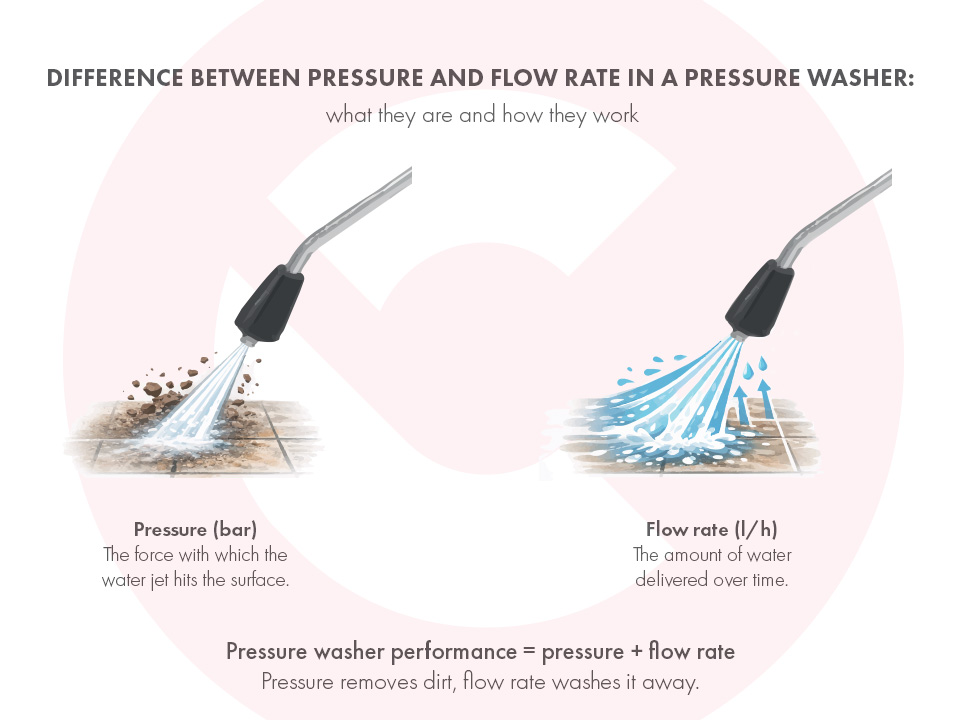
When choosing a pressure washer, most people focus only on bar. In reality, cleaning performance depends on two key factors:
- Pressure (bar): determines the force with which water hits the surface
- Water flow rate (l/h): indicates the volume of water delivered
Pressure breaks down dirt, while water flow rinses it away. A machine with high pressure but low flow rate can be less effective than a well-balanced one.
For this reason, asking “how many bar should a pressure washer have” without considering water flow gives an incomplete picture.
Pressure washers with 100–130 bar pressure
Pressure washers in the 100–130 bar range represent the entry-level segment of high-pressure cleaning. They are designed for occasional use and for tackling light dirt, where a strong mechanical impact is not required. These machines are suitable for delicate surfaces and routine maintenance tasks, but they may reach their limits when dealing with heavier or more stubborn dirt buildup.
This pressure range is therefore ideal for quick and simple cleaning jobs. For more frequent or demanding applications, higher pressure levels are recommended. In practical terms, 100–130 bar pressure washers are commonly used for everyday maintenance tasks where precision is more important than raw cleaning power.
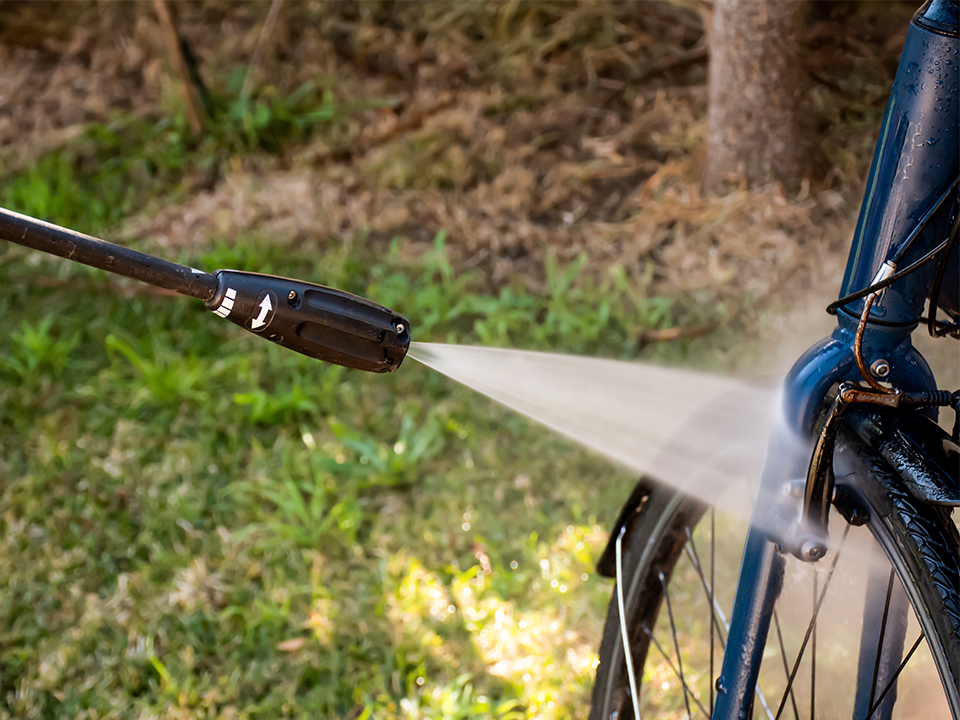
Cleaning bicycles
Pressure washers in this range are ideal for removing mud, dust and debris after use, while maintaining good control over the water jet. They are particularly suitable when it is important to avoid stressing sensitive components such as the chain, bearings or brakes.
Cleaning gutters and drainage channels
Pressure washers in this range allow you to quickly and effectively remove leaves, debris and surface buildup from gutters and drainage channels. The moderate pressure makes it possible to clean without the risk of damaging more delicate elements or joints, especially when working with plastic materials or thin metal surfaces.
Garden maintenance
Pressure washers in this range are ideal for cleaning outdoor furniture, tools and lightly soiled surfaces. They allow you to remove light dirt and deposits without damaging materials such as plastic, treated wood or painted surfaces.
Comac recommends: CI C10
Even simple tasks such as cleaning bicycles, gutters or garden furniture can be carried out more quickly and effectively by using a higher-performance pressure washer.
A solution like the CI C10, with a maximum pressure of 150 bar, delivers a higher level of performance compared to entry-level pressure washers, while maintaining good control of the water jet and an affordable price point.
This allows you to handle both light cleaning tasks and more demanding jobs with greater continuity of use, without the need to upgrade as your cleaning requirements increase.
Pressure washers with 130–160 bar pressure
Pressure washers in the 130–160 bar range represent the most balanced solution for those looking for reliable performance and versatility. In this range, the force of the water jet is sufficient to remove more stubborn dirt while still maintaining good control over surfaces.
This is the most common choice for frequent use, where greater effectiveness is required compared to entry-level machines, without reaching the pressure levels typical of more demanding professional applications.
These pressure washers help reduce cleaning time and improve overall results, especially on outdoor surfaces exposed to weather conditions. In practical terms, this pressure range is particularly suitable for tasks where dirt is more adherent and requires a stronger cleaning action.
Cleaning patios and outdoor surfaces
Ideal for removing accumulated dirt, weather-related residues and deposits over time. The higher pressure allows for more effective cleaning, even on joints and porous surfaces.
Car washing
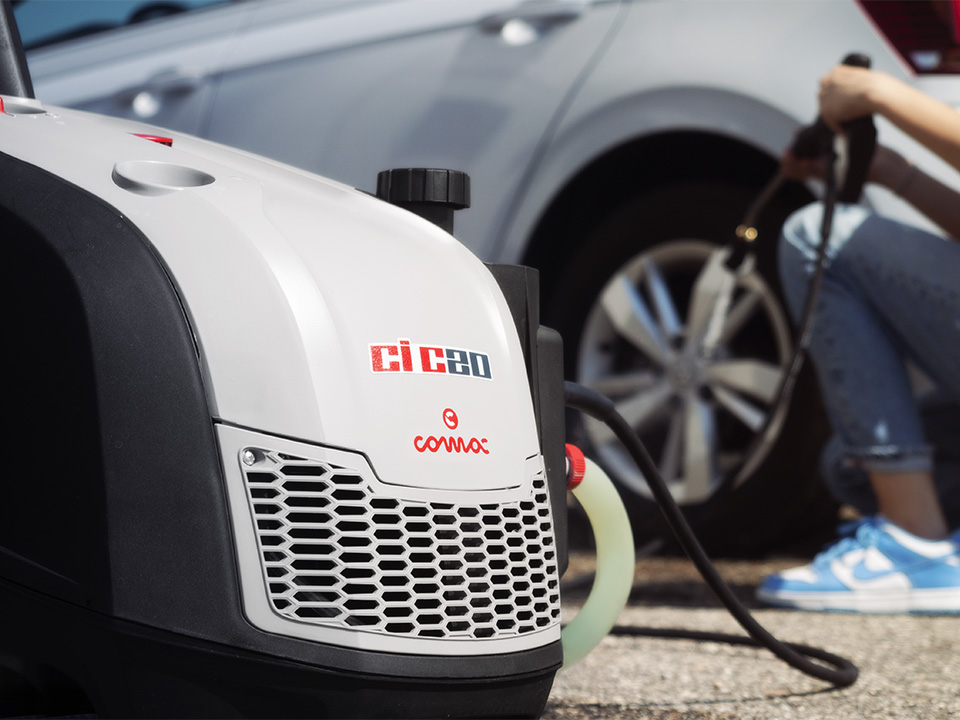
Pressure washers in the 130–160 bar range provide more accurate and faster cleaning compared to lower-pressure machines. When used with the correct distance and accessories, they ensure a good balance between effectiveness and safety on vehicle surfaces. To achieve effective results without risking damage to the bodywork, it is important to follow the correct procedure: in our dedicated guide on how to wash a car exterior, you can find all the recommended steps.
Degreasing mechanical parts
Suitable for removing grease, oil and more persistent residues from equipment and components. In this range, pressure becomes truly effective even on technical or heavy-duty dirt.
Comac recommends: CI C20
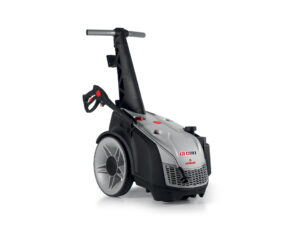
The CI C20 fits within this range with a configuration designed to deliver high performance and consistent operation, even in frequent-use applications. With a maximum pressure of 150 bar, it effectively handles outdoor surfaces, vehicles and technical components, reducing cleaning time and improving overall results.
Compact and easy to handle, it is designed to operate effortlessly even in less accessible or irregular spaces, while ensuring reliability and consistent performance.
It is the ideal solution for those who need a more robust machine than entry-level pressure washers, suitable for sectors such as automotive, craftsmanship and logistics.
Pressure washers with over 160 bar pressure
Pressure washers with more than 160 bar are designed to tackle particularly stubborn dirt and more demanding tasks, where a strong and continuous mechanical action is required. In this range, the pressure allows for the removal of limescale, layered deposits and residues that are difficult to treat with lower-level machines, significantly reducing cleaning time.
In practical terms, these pressure washers are used in situations where dirt is highly adherent or has built up over a long period.
Removing moss and algae
Ideal for cleaning outdoor surfaces exposed to moisture, such as pavements, walls and pool edges. The high pressure allows for the effective removal of moss, algae and biological deposits, even when they are deeply embedded in porous surfaces.
Pool cleaning
Cleaning a pool with a pressure washer requires a careful approach, where pressure must be combined with the correct distance and technique to avoid damaging surfaces and coatings.
Pressure washers above 160 bar are particularly effective for removing limescale, algae and accumulated residues, especially during seasonal opening or deep maintenance.
To perform this task correctly, it is important to follow a precise method, as outlined in our dedicated guide on how to clean a pool with a pressure washer.
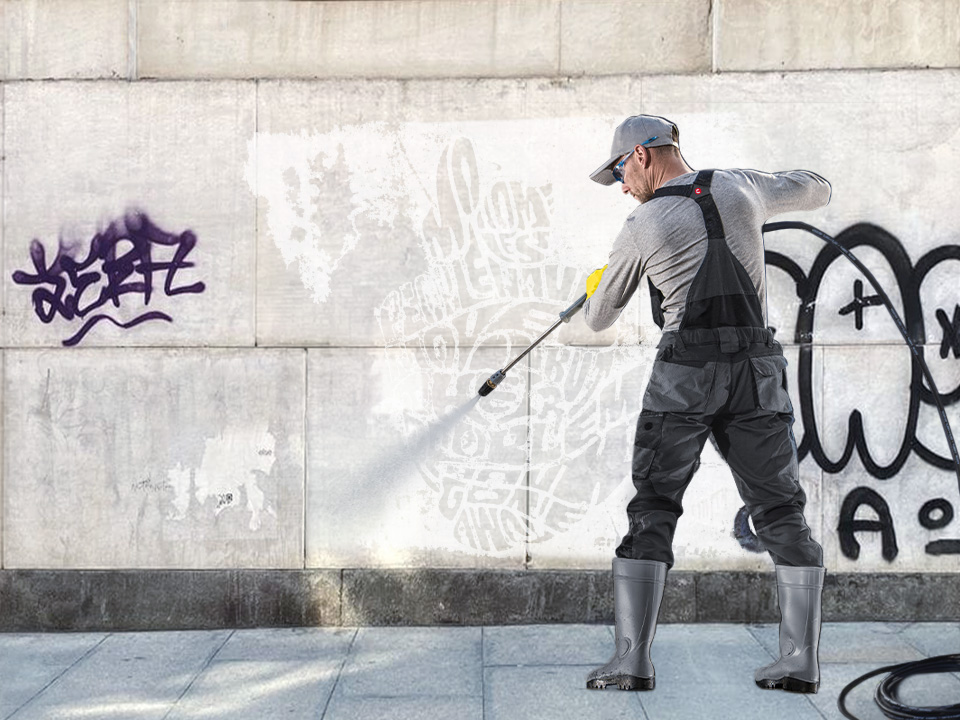
Removing graffiti and paint residues
Pressure washers above 160 bar are suitable for removing graffiti and paint residues from durable surfaces such as walls, concrete and metal.
The higher pressure allows for effective cleaning even on more adherent deposits, while maintaining control of the water jet through the correct distance and the use of the appropriate nozzle.
Comac recommends: CI C30 EM
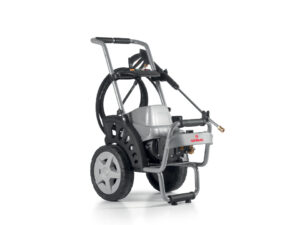
When moving to pressure washers above 160 bar, the goal is no longer simple maintenance, but the effective removal of highly adherent and layered dirt.
In this context, a solution like the CI C30 EM, with pressure up to 230 bar and a high flow rate, allows you to tackle limescale, persistent residues and particularly challenging surfaces with ease, reducing cleaning time.
It is a machine designed to deliver consistent performance even in intensive use, making it suitable for applications where cleaning requires continuity, reliability and high dirt removal capacity.
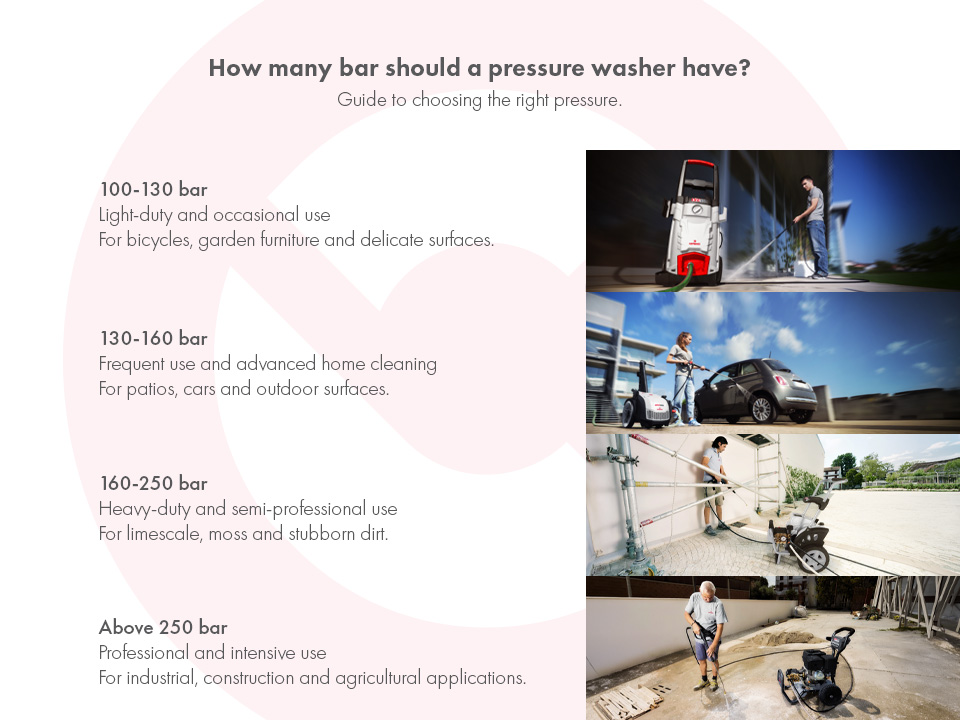
How many bar should a pressure washer have?
Choosing the right pressure for your pressure washer depends on one key factor: the result you want to achieve. Instead of focusing only on numbers, identify your usage needs to find the ideal power level.
- Occasional use and light maintenance (100–130 bar) – Ideal for simple tasks such as cleaning bicycles, garden furniture and delicate surfaces, where precision is more important than force.
- Frequent use and advanced home cleaning (130–160 bar) – The most balanced range, suitable for cleaning patios, outdoor surfaces, cars and equipment. It offers an excellent compromise between effectiveness and control.
- Heavy-duty tasks and semi-professional use (160–250 bar) – ecommended for removing limescale, moss, paint and layered residues, especially on durable surfaces and in the presence of stubborn dirt.
- Intensive professional use (over 250 bar) – Designed for industrial, construction and agricultural environments, where high performance and continuous operation are required on large surfaces.
However, bar is not the only factor to consider. The real effectiveness of a pressure washer comes from the balance between pressure (the force), water flow rate (the rinsing capacity) and the right accessories, combined with proper usage technique.
Choosing the right machine means identifying the best combination for your needs
What is a pressure washer and how does it work?
A pressure washer is a machine that uses a pump to increase water pressure and deliver it through a lance, generating a high energy jet capable of removing dirt, buildup, and residues, even without the use of aggressive detergents.
The working principle is simple: water is drawn in, pressurized, and then expelled with force, combining pressure and flow rate to achieve effective cleaning on different surfaces.
To learn more about how it works and its main components, you can read our complete guide on pressure washer features.
Frequently asked questions
Yes. The nozzle directly affects pressure washer performance: narrower nozzles increase pressure and impact, while wider ones reduce intensity and make the jet more gentle. This significantly influences cleaning results.
Using too much pressure can damage surfaces such as paint, wood, or joints. Too little pressure reduces cleaning effectiveness and increases cleaning time. Choosing the right pressure ensures safe and efficient results.
Yes. A longer hose can reduce pressure due to pressure loss. This effect increases with smaller diameters or low quality materials. Using the correct hose helps maintain pressure washer performance.
This post is also available in:


