

When evaluating a floor scrubber, one of the most common questions concerns productivity: how many square meters can you clean in one hour? The answer does not depend only on the model used, but also on the surface to be cleaned, the type of environment, the level of dirt and the way the work is organised.
In this post, we look at the main aspects to consider in order to estimate the performance of a floor scrubber more realistically, as well as the time needed to complete cleaning operations. The same considerations can also be useful for assessing the productivity of other professional cleaning equipment, such as sweepers and single disc machines.
Understanding how many m² can be cleaned in one hour is also important for those who need to estimate the cost of a cleaning service, prepare a quotation, evaluate tender specifications or organise cleaning activities in a commercial, industrial or public facility.
Cleanable surface area: the first figure to calculate m²/hour
People who use professional equipment, such as floor scrubbing machines, should know some key terms that allow not only to better understand their needs but also to make the most of their potential. This is the reason why we have already created a list containing 8 key terms to know about floor scrubbers. So, it is now time to use this list again and take up two fundamental terms that will help us understand how many square meters can be cleaned in one hour with a floor scrubber: total surface and washable surface.
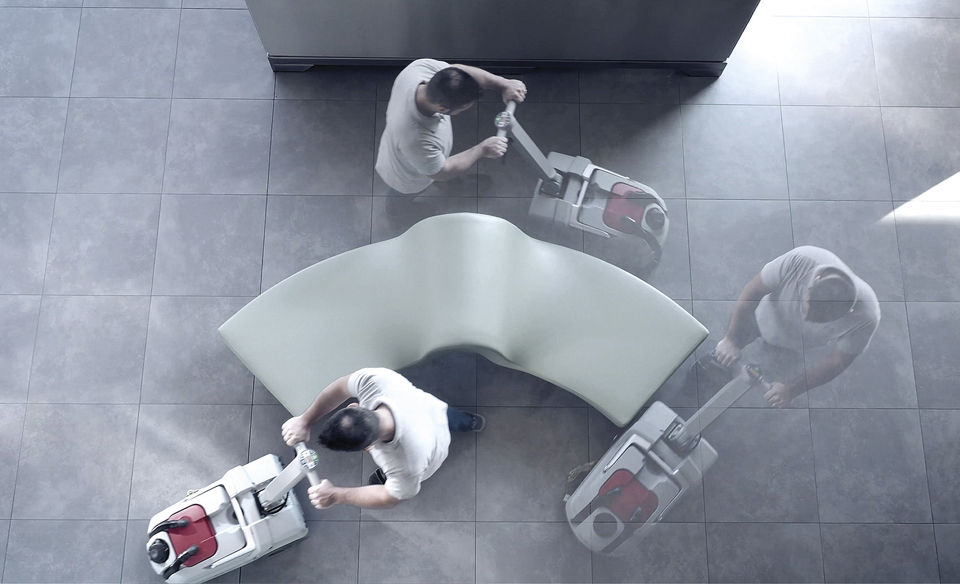
Total surface or washable surface?
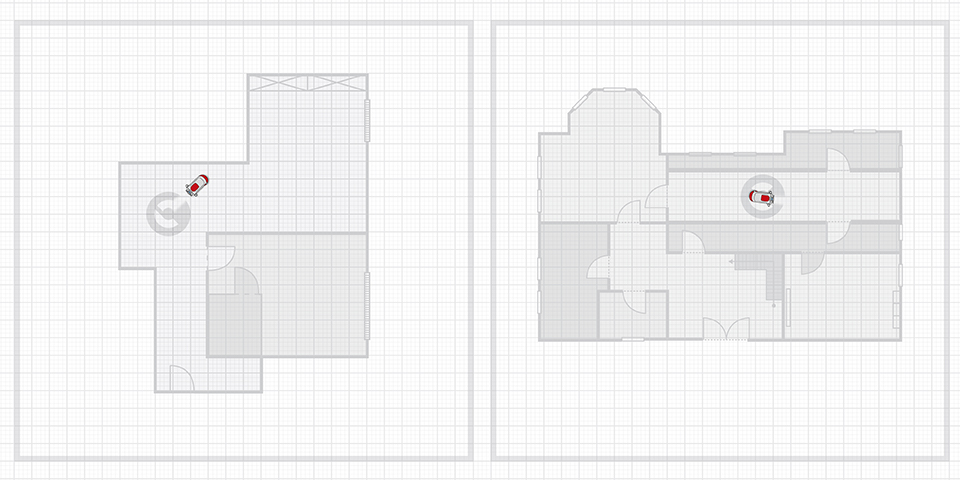
Understanding the difference between the total surface and the washable surface of an area is essential in order to calculate the square meters that can be cleaned with a floor scrubber. Total surface includes the entire area of the building, and may include closets, boiler rooms, technical rooms or other areas that are not part of the space to be cleaned on a regular basis (such as areas occupied by machinery or workbenches). Washable surface, on the other hand, defines the space that really needs to be cleaned on a regular basis. The ratio between the two values can vary considerably, in fact, the washable surface usually is smaller than the total surface.
How to calculate the washable surface?
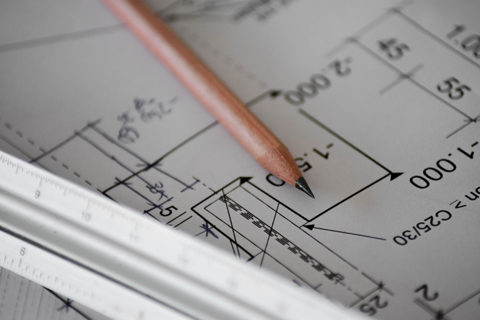
To obtain the data needed to calculate the real square meters of the washable surface you have two possibilities:
- Carry out a site inspection and measure the spaces using a meterstick.
- Use the architectural drawing for the measurement.
The results obtained from the measurement must be expressed in meters. Once you have the measurements, the formula for calculating the washable surface is very simple, and it is the following:
square meters washable surface = (length x width) – square meters non-washable surface
For example, an uncluttered room measuring 40m length and 65m width has a washable surface of 2,600m2. In this case the washable surface corresponds with the total one.
Whereas, if you have a machine in the room that measures 15m length and 6m width, you must subtract 90 m2 of non-washable surface from the surface. The washable surface of this space therefore measures 2,510 m2.
Productivity rate: how to calculate how many square meters can a floor scrubber clean in one hour?
To calculate the square meters that can be cleaned in one hour with a floor scrubber we should consider a term that is often used in the professional cleaning field, that is the productivity rate.
In fact, the productivity rate indicates how many square meters can be cleaned in an hour, and the formula for its calculation is as follows:
productivity rate = total square meters of the washable surface / total labor hours for cleaning the surface
So, for example, if you need 2 hours to clean an area of 2,600 m2, your productivity rate will be 1,300 m2/hour.
In general, the smaller the surface to be cleaned, the higher the productivity rate will be, and vice versa for larger areas. But there are also other variables that can affect the productivity rate such as:
- The design of the structure itself. We have taken a surface with a rectangular shape and free from clutter as an example, but the building you need to clean could have many different environments with different sizes.
- Occupant density: there will certainly be more work to do to clean an office with 15-person desks than an office occupied only by one person.
- The surface type and the dirty conditions.
- Cleaning technologies: for sure last generation floor scrubbers are more efficient than older machines.
- The processes that are outlined for cleaning, or rather if you are well organized or constantly switching from one job to another.
Productivity rates: a reference for cleaning companies and facility managers
Based on the experience gained in the professional cleaning field, the Worldwide Cleaning Industry Association (ISSA) has drawn up a detailed list containing the 612 cleaning production rates related to cleaning times applicable to industrial, commercial and educational facilities. These “rates” provide an international standard benchmark for calculating the average time required for a scrubbing machine, but also for other cleaning equipment, to complete each of the cleaning activities that are typically contracted with cleaning companies and performed at various speeds.
Well, in case the information contained in this post is not sufficient to answer your question, remember that a worldwide network of authorized Comac dealers is at your disposal to give you an answer. Contact us!
Frequently asked questions
m²/hour is calculated by dividing the cleanable surface area by the time required. For example, if a surface area of 2,600 m² is cleaned in 2 hours, productivity is 1,300 m²/hour.
Yes. Knowing the m²/hour helps estimate how many hours are needed to clean a specific surface area. This figure supports the evaluation of service costs, resource planning and the comparison of different cleaning solutions.
To estimate cleaning times for specifications or a tender, the starting point should be the real cleanable surface area, not the total surface area of the building. Once the actual m² to be cleaned have been identified, they can be divided by the productivity rate of the floor scrubber or equipment used. This provides a more realistic estimate of the hours needed to complete the service.
Calculating m²/hour helps verify whether the times set out in the contract are consistent with the surface area to be cleaned and the expected result. It is useful both for the cleaning service provider and for those managing the service, as it makes it possible to monitor productivity, assess any deviations and improve the organisation of activities.
This post is also available in:


